From Cute to Cruel: What Spring Celebrations Mean for Chicks
Spring may symbolize new life, but for millions of chicks, most Easter traditions bring only suffering, neglect, and death.
Every spring, cultures around the globe celebrate the arrival of spring and Easter with vibrant colors, playful traditions, and the hope of renewal. But behind the festive imagery lies a harsh reality: many of these practices inflict cruelty on some of the most vulnerable creatures—chickens and baby chicks.
In this post, we delve into the unethical treatment of birds during these celebrations, exposing dark truths that most people overlook.
Dyeing Chicks for Easter: The Hidden Cruelty Behind Colorful Traditions
Every spring, brightly colored chicks appear in markets, pet stores, social media posts, and children's Easter baskets. With their pastel-dyed fluff in shades of pink, blue, green, and yellow, they may look festive and fun. But behind these artificially bright hues lies a disturbing tradition rooted in commercialization, animal suffering, and the trivialization of life.
A Tradition With Disturbing Roots
The practice of dyeing chicks for Easter likely stems from the older custom of dyeing Easter eggs—both representing themes of new life and rebirth. It gained popularity in the United States during the 1960s and 1970s, though references date back as early as the 1880s. The trend emerged as a commercial tactic to boost seasonal sales by marketing chicks as novelty gifts for children. Similar practices are found in countries like India, Malaysia, and China, where dyed chicks are still sold in markets as inexpensive toys or festive decorations.
The Process: Hidden Suffering for the Sake of Aesthetic
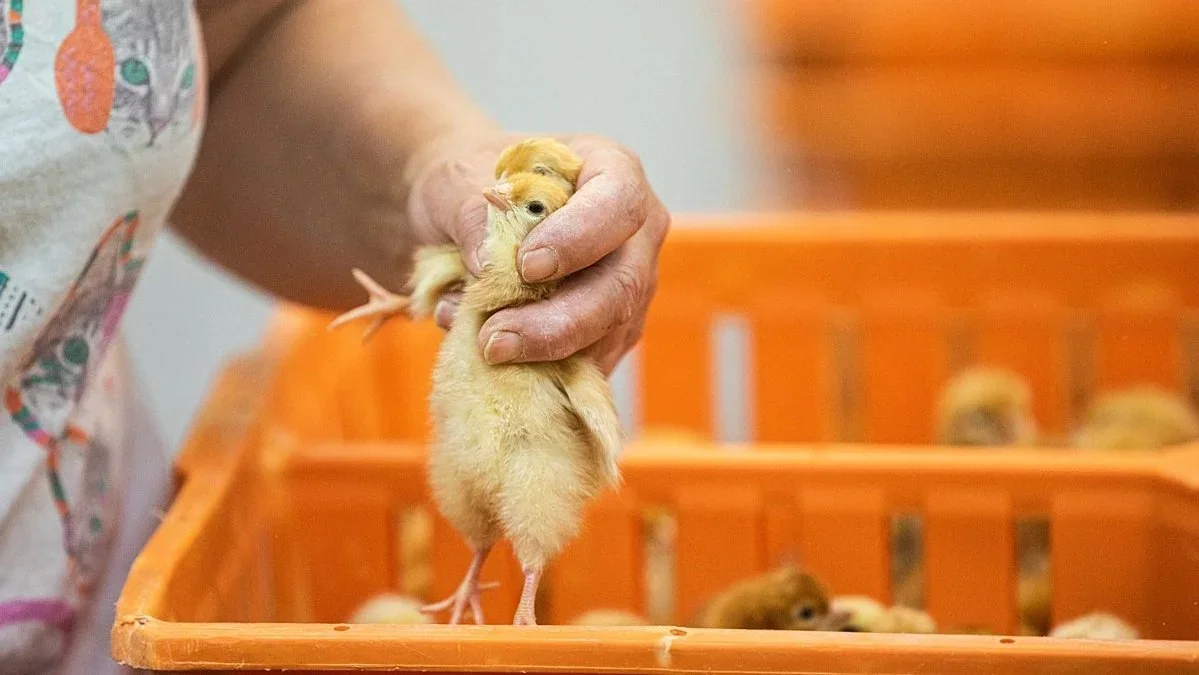
Distressing Methods: Dyeing often involves spraying or dunking fragile chicks into tubs of artificial coloring. In some cases, dyes are injected directly into the egg before hatching. Chicks are handled roughly—tossed into plastic bins, held down, or clumped together in large numbers.
Health Risks: The dyes may contain unregulated or toxic chemicals. Absorbed through the skin or inhaled, they can irritate the chicks’ delicate systems. The process causes stress, injury, and often long-term health issues—though few chicks live long enough for this to be studied.
Emotional Toll: Baby chicks are naturally vulnerable. The stress of being separated from their mothers, handled excessively, and altered against their will causes both psychological and physical suffering.
This cruel tradition not only represents animal abuse but reinforces a troubling attitude—where life is trivialized for the sake of entertainment.
Still Happening Today—Legally and Illegally
In the United States, dyeing chicks is illegal in about half of the states, but legal in the other half under certain conditions. For example, Florida briefly repealed its ban in 2012 before reinstating it a year later. Enforcement varies, and dyed chicks can still be found in states where the law remains vague or unenforced.
In New York City, where dyeing and selling colored animals is illegal, the ASPCA seized 49 dyed chicks from a Brooklyn pet store. The birds were being sold as Easter novelties, and half were identified as male—also illegal to keep within city limits. The chicks were later given sanctuary.
Globally, the tradition remains especially common in developing countries, where animal welfare laws are either lacking or poorly enforced. In many regions, the practice continues despite criticism from local and international animal advocacy groups.
The Aftermath: From Holiday Highlight to Abandoned Animal
Once Easter is over and the chick's bright color fades—or they begin to grow into adult birds—many families realize they are not equipped to care for a chicken who can live 10 to 15 years. The result? These animals are often discarded, abandoned in parks or backyards, or surrendered to overwhelmed shelters. Few survive, and many are euthanized or fall victim to predators.
This tradition not only reflects cruelty but also reinforces a mindset that treats sentient beings as disposable commodities. When animals are sold for a fleeting holiday aesthetic, their suffering is hidden behind pastel packaging and seasonal cheer.
Classroom Chick Hatching Projects: Why They Teach the Wrong Lesson
Hatching projects in schools are commonly marketed as enriching educational experiences, designed to teach young students about biology, responsibility, and the miracle of life. However, behind the well-meaning intent lies a troubling truth: these classroom experiments frequently harm the very creatures they aim to celebrate, sending unintended messages about animal disposability that persist well beyond the classroom walls.
When Education Betrays Ethics
Misguided Experiments: Classroom chick hatching projects in the United Kingdom, United States, and Canada often aim to teach children about life cycles. However, the reality is far more grim.
Developmental Abnormalities: Natural incubation involves a mother hen’s careful rotation of eggs—a process that cannot be easily replicated in schools. The result? Ill and deformed chicks that endure developmental suffering.
Unresolved Consequences: With no long-term plan for the chicks, schools frequently contribute to a cycle of neglect and abandonment. This practice teaches children that animals are disposable, undermining the values of compassion and respect for life.
Animal welfare organizations have repeatedly condemned these projects. Yet despite ongoing concerns, hatching chicks remains a common practice each spring—not only in schools, but also at home, where online tutorials now encourage families to hatch chicks using recycled materials, egg cartons, and makeshift incubators, further normalizing the idea that life is something to be created, observed, and discarded for entertainment.
Compassionate Alternatives
Thankfully, there are kinder, more responsible ways to teach children about life cycles and bird development. ‘Hatching Good Lessons’, a guide by ‘United Poultry Concerns’, offers engaging, age-appropriate activities for educators and parents. The booklet includes a variety of creative lessons for students in grades K–6 and highlights the ethical issues involved in live-animal hatching projects.
Gifting Live Chicks: An Easter Tradition with Serious Consequences
Gifting live chicks for Easter is often portrayed as a charming and innocent tradition, especially appealing to families with young children. These small, fluffy birds symbolize renewal, innocence, and joy—qualities perfectly aligned with springtime celebrations. Yet this tradition, while seemingly harmless, leads to serious consequences for the animals involved.
Many families underestimate the significant care and attention chickens require. Once the initial excitement fades and the chicks begin to grow, the reality of feeding, housing, and nurturing these animals sets in. Unprepared caregivers frequently abandon chicks or surrender them to shelters, where their futures remain uncertain. Animal welfare groups like ‘The Humane Society’ have highlighted this issue, noting a consistent increase in abandoned chicks shortly after Easter each year.
The practice of gifting live animals for seasonal amusement reinforces a damaging perception: that the value of a living creature depends solely on its novelty or entertainment value. By treating them as seasonal toys, we not only compromise their welfare but also perpetuate a culture of disposability toward living beings.
Compassionate Alternatives
Instead of gifting live animals, consider compassionate alternatives—such as plush toys, books, or activities—that celebrate the spirit of spring without contributing to animal neglect and abandonment. By choosing responsibly, we teach empathy, kindness, and the true meaning of caring for animals.
Easter Egg Demand: How Spring Celebrations Fuel Suffering
The Hidden Cost of Easter Eggs
The Easter season's surge in egg demand intensifies pressure on industrial production systems, which prioritize efficiency over animal wellbeing. While dyed or decorated eggs symbolize renewal and joy in cultural traditions, their industrial supply chain exposes a darker reality: large-scale operations often subject hens to overcrowded cages, debeaking without pain relief, and premature slaughter once productivity declines. This disconnect between festive symbolism and industrialized cruelty highlights a system where profit routinely outweighs ethical considerations.
Harmful Practices in Egg Production
Male Chick Culling
Male chicks face immediate disposal after hatching, deemed worthless in an industry that values only egg-laying females. Common methods like maceration (grinding alive) or suffocation highlight a chilling disregard for life, reducing sentient beings to mere “byproducts” of industrial efficiency. This routine elimination underscores a system that prioritizes profit margins over ethical responsibility.Debeaking and Confinement
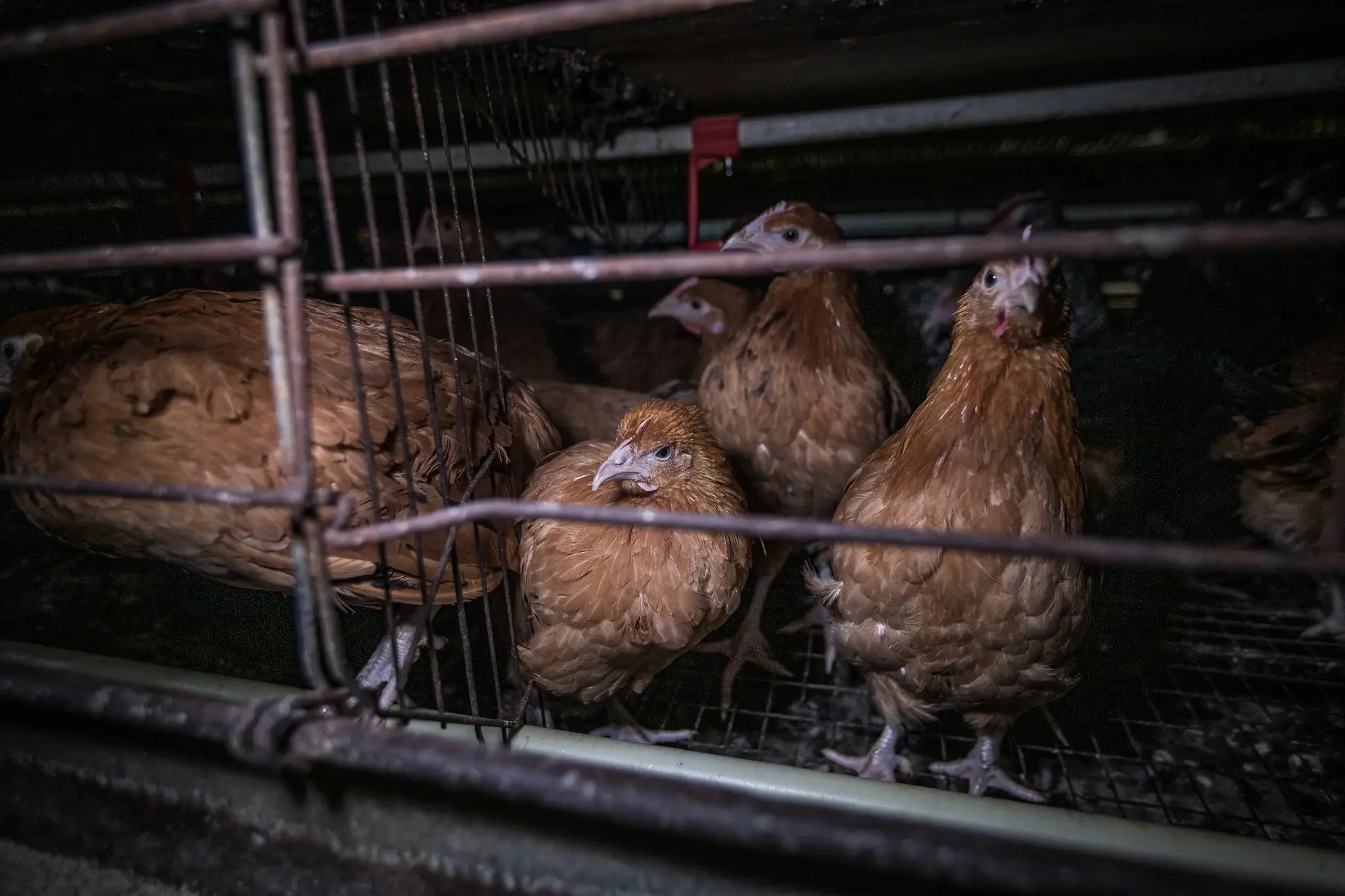
Female chicks endure debeaking—a traumatic, unanesthetized procedure where sensitive beak tissue is sliced or burned—to prevent stress-induced pecking in overcrowded environments. Hens then spend their lives in confinement: battery cages restrict movement to a space smaller than an iPad, while “cage-free” systems often mean overcrowded warehouses where natural behaviors like dust-bathing remain impossible. These conditions create physical and psychological suffering, as birds are denied even basic species-specific needs.
Compassionate Alternatives
We believe there are always alternatives to products that perpetuate animal suffering. Consider embracing compassionate choices this Easter by exploring plant-based decor alternatives, such as wooden, ceramic, or papier-mâché eggs, or creative spring-themed crafts using flowers, seeds, or recycled materials. For inspiration, revisit our Last Year’s Easter Post, which shares creative ideas for egg-free celebrations, from natural dye experiments to symbolic rituals that honor renewal without exploitation.
Celebrate without Cruelty
As spring returns each year, so do the traditions we associate with it—eggs, chicks, baskets, and bright colors. But behind these familiar symbols lie stories of suffering, neglect, and exploitation. Chick dyeing, school hatching projects, live animal gifting, and the increased demand for eggs each Easter all point to a troubling truth: animals are still being used as decorations, experiments, and commodities in the name of celebration.
But it doesn't have to be this way. We can choose compassion. We can teach children to value life without causing harm. We can celebrate renewal without participating in cruelty.
This Easter, please leave chicks out of your shopping cart, eggs off your plate, and cruelty out of your celebrations. Choose alternatives that reflect not just the beauty of spring, but the kindness we all hope to carry into the world.
Sources & Further Reading
The Suffering of the Hens in the Egg Industry: Life of a Hen
How to Replace Eggs: Recipes and Resources
Ready to Go Vegan? Vegan Bootcamp
Scrambling for Solutions: Ethical Choices for Easter Eggs
Easter, a time of joy and renewal, masks the harsh reality of hens suffering in the egg industry, facing confinement and exploitation. Behind the colorful Easter eggs lies a story of confinement, deprivation, and exploitation for these birds, offering no hope of renewal or rebirth.
Modified image depicting a hen in a battery cage, sourced from an Andrew Skowron photograph.
Easter embodies hope and new beginnings; except, that is, for the billions of lives whose exploitation is the basis of an increasingly popular and thoroughly unsustainable seasonal celebration.
For many, painting, hiding, and finding eggs are family traditions soaked in childhood memories, a celebration of life's triumphs and the promise of brighter days ahead. Innocent and fashionable activities popularized by international media. However, beneath the surface of painted eggs and joyful hunts lies the harsh reality of layer hens' suffering. There is no renewal or rebirth for them. Rather, and as we have shown time and again, their existence under the egg industry is one of perpetual confinement, pain, and premature death; a life of unimaginable hardships deprived of basic freedoms, and subjected to relentless exploitation.
The Story Behind Egg Coloring and Its Ethical Implications
The practice of coloring and decorating eggs has a rich and diverse history that spans centuries and cultures. It is believed to have originated from ancient pagan rituals celebrating the arrival of spring and the resurgence of life in nature. Eggs, as symbols of fertility and transformation, were often adorned with vibrant colors and intricate designs, marking the transition from winter's dormancy to spring's vibrancy.
Easter, as a religious celebration rooted in Christianity, further contributed to the tradition of egg coloring and decorating. During Lent, practicing followers of the belief abstained from certain foods, including eggs. This practice resulted in a surplus of eggs accumulating by Easter, providing the practical basis for the tradition of decorating eggs as a symbol of new life and hope during Easter celebrations. However, it's important to note that the abundance of eggs during this time is not a natural occurrence but rather a consequence of human intervention. The continuous laying of eggs by chickens, unlike most other birds, is a result of selective breeding and genetic manipulation, representing a cruel tinkering with their bodies and reproductive systems.
As the tradition progressed, eggs became intertwined with Christian beliefs, symbolizing the resurrection of Christ and the promise of new life. This tradition evolved into a cherished custom, passed down through generations. Eventually, Easter egg hunts transcended religious and cultural boundaries, becoming a beloved universal activity. However, this popularity coincided with the industrialization of egg production, leading to increased suffering for hens in factory-like operations. Without this industrialization, the tradition could not have reached its current global scale.
Navigating Welfare Challenges during Peak Seasons
The decoration of and with eggs during Easter has indeed become a global phenomenon, marking the second-busiest time for egg sales following the winter holidays. However, this year, the industry faces compounded challenges due to the widespread bird flu outbreak, resulting in the loss of over 13.64 million hens, used for table eggs, in the United States since November.
But it's not just the holiday demand and the smaller stock sizes that have farmers struggling to supply enough eggs; recent welfare updates in states like California, Colorado, Massachusetts, Michigan, Nevada, Oregon, Rhode Island, Utah, and Washington have added to their challenges. Despite consumers noticing the surge in retail prices due to heightened demand, they frequently fail to recognize the escalated suffering experienced by hens, irrespective of the barn setting. Many express their frustration publicly, seeking cheaper alternatives, despite their previous voting support for 'better hen welfare' initiatives just a few months ago.
This inconsistency in supporting policies with words rather than actions is also evident internationally. For instance, a significant loophole has recently come to light regarding Germany’s ban on male chick killing. Although celebrated as a major win, there is no prohibition on the import of eggs, or egg products, from countries that still allow the killing of male chicks. This includes pre-dyed Easter eggs that flood the market during festive periods. Furthermore, while the ban addresses the high number of dead male chicks, the female hens are still subject to exploitation and early death. The poultry industry's alert about eggs sourced from farms where chick culling persists highlights how consumers, who were the main driver for the culling ban, often compromise their ethical values when confronted with higher prices and limited supply.
While changes in the current food system are essential, particularly regarding animal wellbeing, the difficulties of balancing the demands of various interested parties–from stakeholders and farmers to consumers and animal welfare organizations–raises a key question: why is the emphasis solely on transitioning to cage-free systems rather than exploring egg-free alternatives or reducing egg consumption?
In a previous blog post, we argue that if we are looking at alternatives for animal eggs in our cooking and baking, we find that there are plenty of economical and healthier options available, even for traditional Easter crafts. Considering this, let's delve into exploring eco-friendly egg-free options for Easter celebrations.
Discovering Ethical Alternatives for Easter Celebrations
This Easter, let's hop into a world of creativity and compassion by exploring egg-free options for coloring and crafting. Whether you're crafting with kids or enjoying some solo artistic time, there are plenty of sustainable and eco-friendly alternatives to traditional egg dyeing.
Sustainable Coloring Options:
Plant-Based Dyes
Utilize the vibrant colors found in fruits and vegetables like beets, spinach, turmeric, and blueberries to create beautiful and natural dyes.Natural Food Coloring
Opt for organic and plant-based food coloring options available in stores for a convenient yet eco-friendly choice.DIY Eco-Dyes
Get crafty with homemade dyes using ingredients like tea, coffee, onion skins, and paprika for unique and earthy hues.
Vegan Egg Alternatives:
Wooden Eggs
Reusable and biodegradable, wooden eggs are a durable and eco-friendly option for egg crafting.Ceramic Eggs
Long-lasting and recyclable, ceramic eggs offer a sustainable alternative to traditional eggs.DIY Paper Mache Eggs
Create your own eco-friendly eggs using recycled paper and non-toxic glue for a fun and sustainable crafting experience.Plastic-Free Plastic Eggs
Look for plastic-free plastic eggs made from biodegradable materials for a less harmful option.Plastic Eggs
If using plastic eggs, opt for those made from recycled materials and commit to reusing them in future Easter celebrations.
Craft Compassionately:
Reuse and Recycle
Instead of buying new crafting materials, repurpose items from around the house like old fabric scraps, cardboard, or paper to reduce waste.Go Digital
Explore virtual Easter egg decorating apps or online platforms for eco-friendly and waste-free crafting fun.Spread Kindness
Incorporate acts of kindness into your Easter celebrations, such as making DIY gifts for loved ones or donating to local animal sanctuaries in honor of the holiday.
Easter, with its rich tapestry of tradition and symbolism, invites us to reflect not only on the joys of renewal and celebration but also on the ethical considerations that accompany our festive traditions. The vibrant history of egg coloring reminds us of the interconnectedness of our choices and the impact they have on the world.
In the midst of fluctuating food prices and economic uncertainty, it's more important than ever to approach our diets with mindfulness and intention. By opting for egg-free alternatives, we reduce our ecological footprint and extend our compassion to the animals who share our planet.
As we gather with loved ones to celebrate Easter and the arrival of spring, may our plates be filled with nourishing food that honors the earth and all its inhabitants.
Best wishes for a holiday season filled with joy, love, and kindness, both on our plates and in our hearts, not just during the holidays but every day beyond.
Juliane Priesemeister, Executive Director
Juliane worked almost a decade for an international corporation as an information designer. Generating compelling visual stories was her daily deed, but as much as she enjoyed the creative work the big corporation environment left her hungry for substance and impact.
When she started her yoga journey a few years ago the “do no harm” philosophy pushed her to align work with her personal ethics and values. Today she uses her omnibus skill set, including marketing communications, economics, and graphic design, to reveal the truth about the egg industry to consumers.
Dr. Crow's Bird Show
We all know the eggspression: What came first, the Chicken or the Egg?
We all know the eggspression: What came first, the Chicken or the Egg? On today’s Bird Show (Apr. 7, 2020), Dr. Crow and Co-host Charlene are joined by Egg-Truth.com’s Nigel Osborne to discuss the origins of the Easter Egg. (Egg-rolling contest, anyone?) Then we’ll swoop in for a deeper look at backyard flocks and the industrial egg industry and what it all means for the modern Chicken. Finally, we’ll share some Easter craft ideas with the potential to become new fun, family traditions.