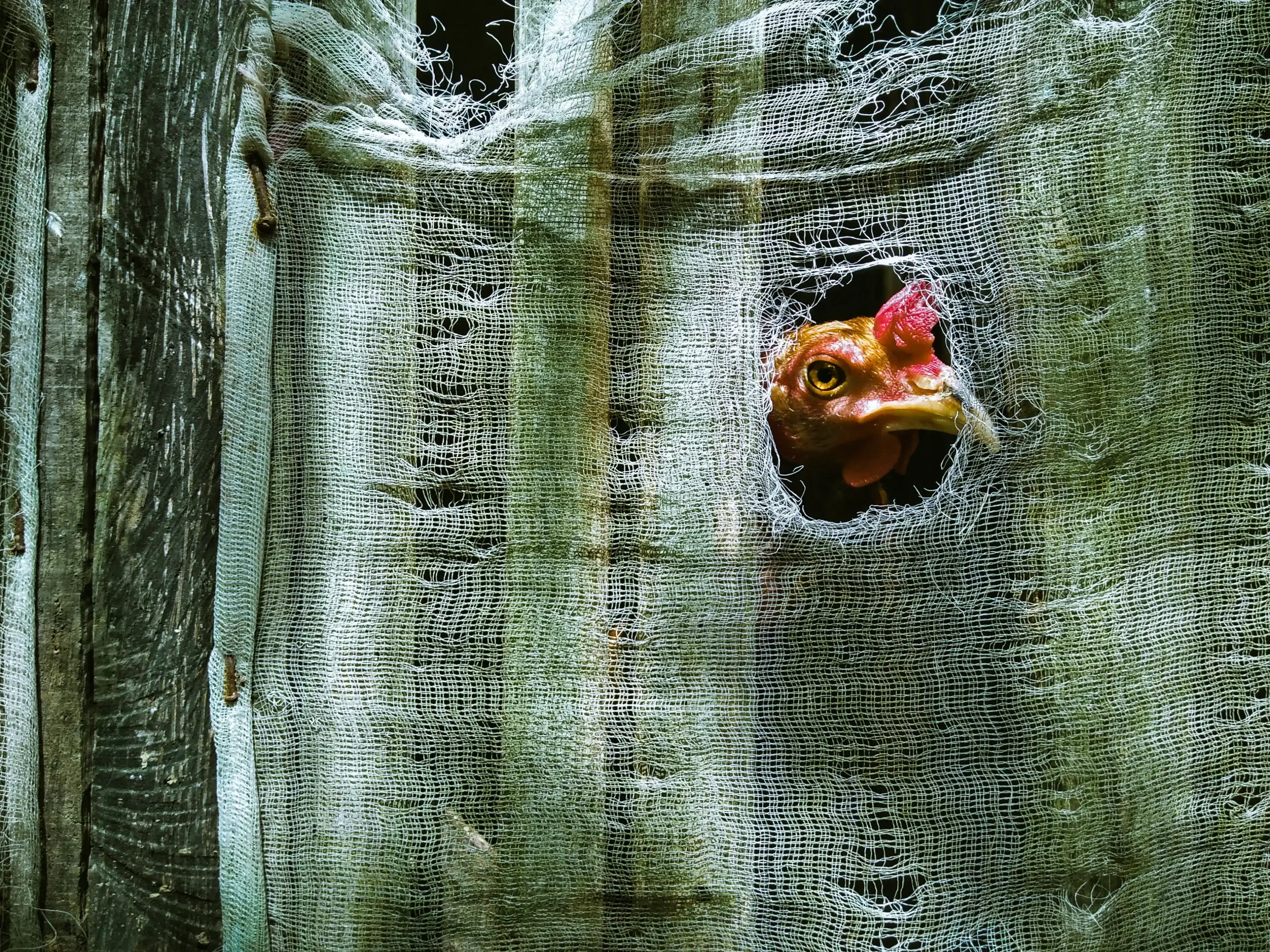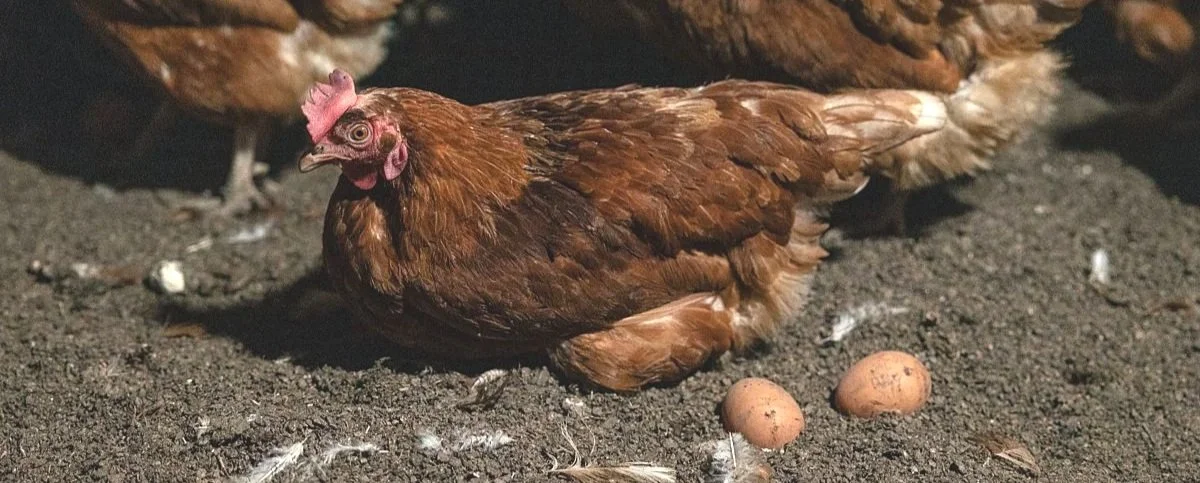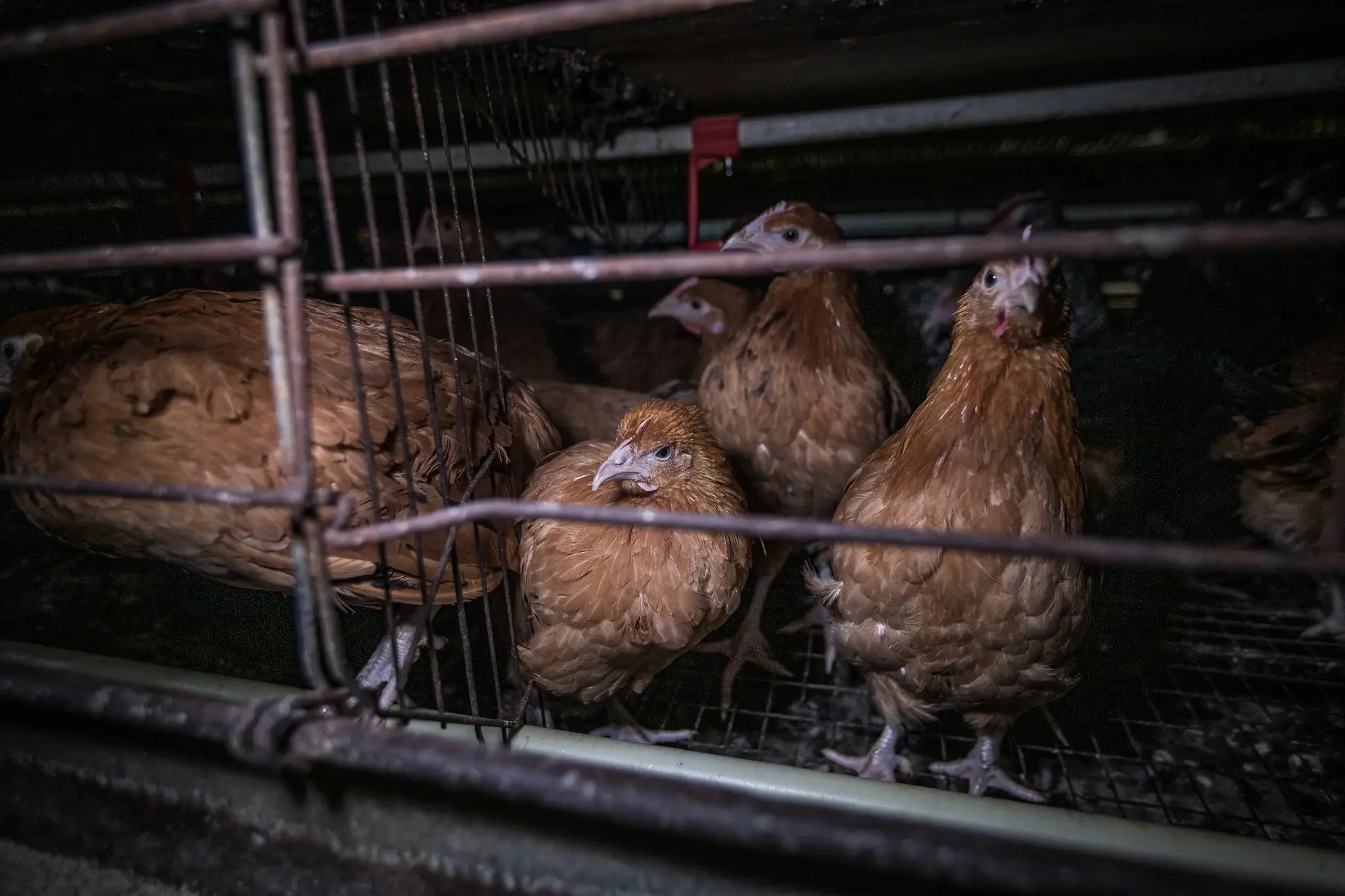
Are Cage-Free or Backyard Eggs Really Ethical?
Discover why every egg—organic, free-range, or backyard—causes suffering, and what you can do instead.
What if every egg—even the ones labeled cage-free, organic, free-range, or collected from a neighbor’s backyard—carried hidden suffering? For decades, the egg industry has used comforting labels to reassure us we can eat eggs without guilt. But the reality is unavoidable: there is no humane or ethical way to consume eggs.
Are Cage-Free or Free-Range Eggs Humane?
Cage-free and free-range labels focus on appearances rather than ethics. A hen might not live in a tiny cage, but her body is still being used and controlled. Whether she lays inside a wire enclosure or on open grass, the outcome is the same: when she stops producing enough eggs, she is killed. The problem isn’t just the housing—it’s the system itself.
Why Were Chickens Bred This Way?
Egg consumption is only possible because chickens have been selectively bred to serve human demand. Modern hens lay about 300 eggs per year, compared to just 10–15 annually from their wild ancestors. This unnatural overproduction pushes their reproductive systems into constant overdrive, placing enormous strain on their bodies.
What Happens to Hens’ Bodies?
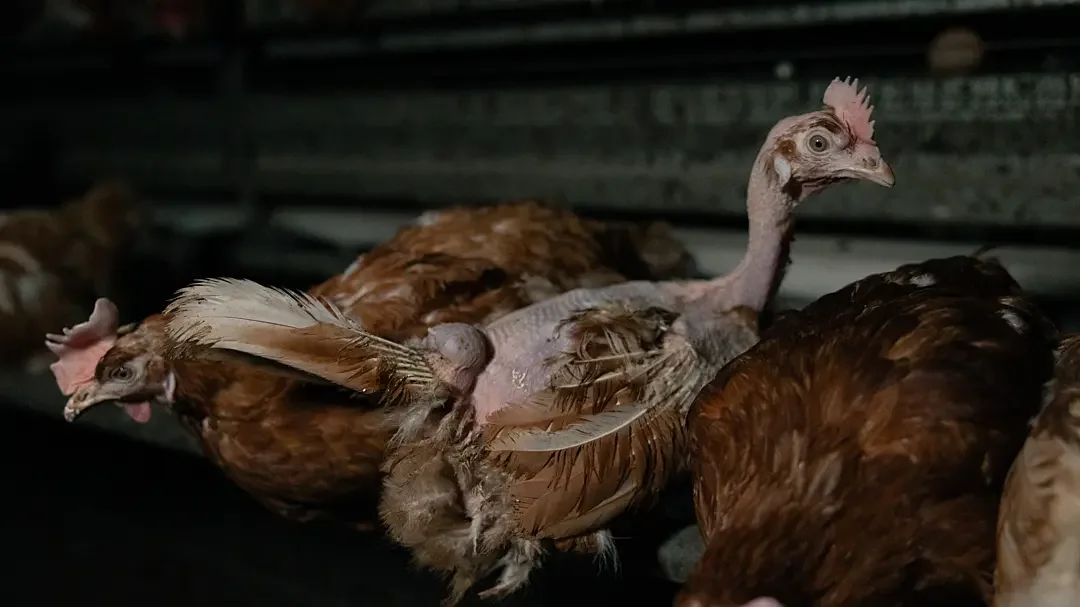
Through selective breeding, hens have been forced into chronic hyper-ovulation, meaning their bodies are trapped in a cycle of laying and can no longer stop producing eggs. The results are painful and often deadly. Hens suffer from:
Egg yolk peritonitis
Reproductive cancers
Osteoporosis and brittle bones
Uterine prolapse
These are not rare issues, but predictable outcomes of forcing a body to overproduce. Every egg causes invisible damage, whether or not the label says “cage-free.”
What About Roosters?
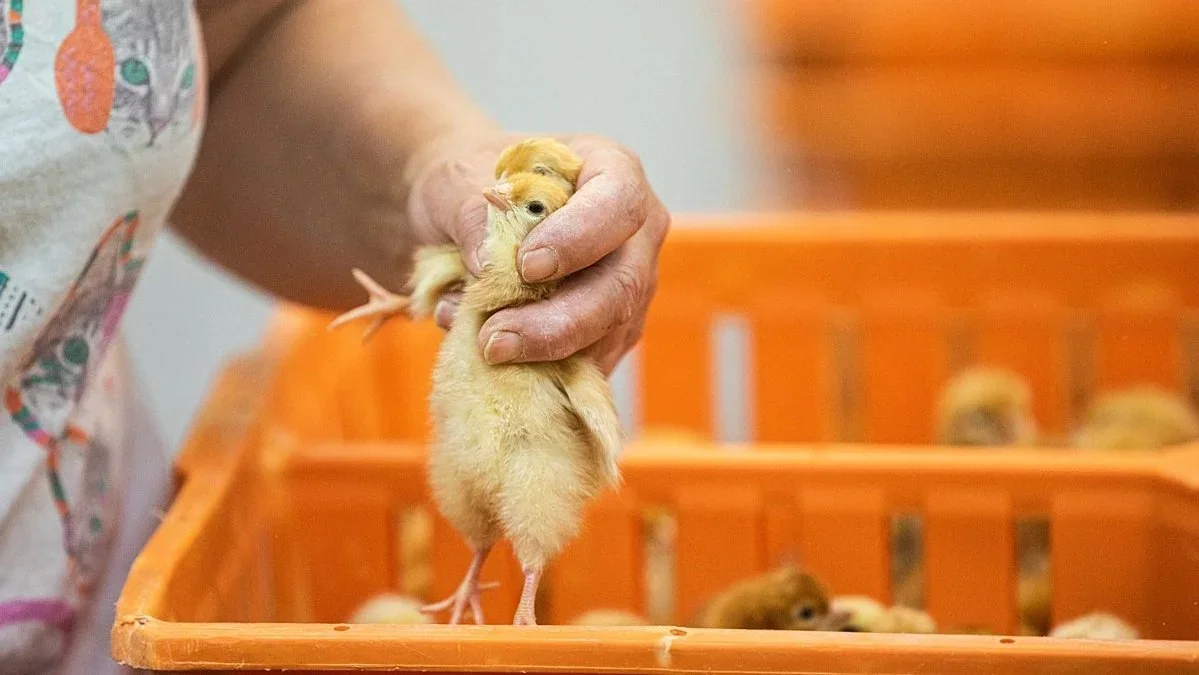
For every hen who lays eggs, there is almost always a brother who never survives. Male chicks are considered useless to the egg industry because they cannot lay. As a result, billions are killed every year, often within hours of hatching. Roosters not only face mass killing as chicks, but those who survive also suffer from the same distorted breeding that damages hens. Overloaded sex hormones take a toll on their bodies, leaving them vulnerable to illness and shortening their lives.
Are Backyard Eggs Ethical?
Many people argue that backyard eggs are different. But even small flocks trace back to the same breeding systems. Keeping or consuming those eggs reinforces the idea that hens exist for our use. As long as eggs remain a normal part of diets, chickens will continue to be bred, exploited, and discarded.
What Can We Do Instead?
If you live with hens, the most compassionate approach is to protect their health by reducing or preventing egg-laying. When eggs are laid, they should be fed back to the hens to restore lost nutrients. Any extras can be composted or returned to the earth and not placed back into human consumption.
Beyond your own hens, the best way to help is to:
Support farmed animal sanctuaries
Choose vegan egg alternatives
Share the truth about the egg industry with others
The Truth: There Is No Ethical Egg
Labels cannot cover up the reality. Cage-free, free-range, organic, or backyard. Every system still rests on the exploitation of hens and the destruction of roosters. Every egg comes at the cost of a life cut short.
The most ethical choice is to stop consuming eggs altogether. By rejecting them, we break the cycle of suffering and create a future where hens are valued for who they are, not what they produce.
Please leave eggs off your plate. Choose compassion instead.
Further Reading and Resources
How to Ditch Eggs: Guide to Egg-free Living
How to Replace Eggs: Recipes and Resources
Ready to Go Vegan? Vegan Bootcamp
Why Did My Hen Stop Laying Eggs?
Modern backyard hens stop laying not just due to age or environment, but because decades of selective breeding push their bodies far beyond their natural limits, causing pain and health issues.
Summary:
Hens naturally stop laying due to age (production peaks in first 2–3 years), seasonal changes (need 14+ hours of daylight), stress from environmental changes, molting, or health issues. However, these natural pauses reveal a deeper concern: modern hens are bred to produce 250–300 eggs annually, versus their wild ancestors' 10–20 eggs per year. This extreme overproduction causes severe health problems including bone fractures (affecting up to 85% of laying hens), reproductive tract disorders like egg binding and ovarian cancer, liver problems, and chronic exhaustion. Understanding why hens stop laying naturally helps us question whether we should expect constant production at all, given the documented physical toll on their bodies.
What's Really Happening When Hens Stop Laying
You noticed fewer eggs in the nest box and came looking for solutions. Maybe you're wondering about lighting, supplements, or feeding schedules. But before diving into ways to restart production, it's worth understanding what constant egg-laying actually does to a hen's body.
Wild red junglefowl—the ancestors of all domestic chickens—naturally lay just 10–20 eggs per year, enough to raise one or two broods and ensure their species' survival. Today's backyard hens have been selectively bred to produce 250–300 eggs annually, a biological impossibility that nature never intended.
This dramatic difference isn't just impressive, but devastating to their health.
The Natural Reasons Hens Stop Laying
Several factors naturally influence egg production, and understanding these can help you see your hen's behavior differently:
Age and Life Cycle: Hens typically peak in their first two years, then gradually decline. By age three or four, many significantly reduce laying. This isn't a malfunction, but a natural slowdown their bodies desperately need.
Seasonal Changes: Hens require approximately 14 hours of daylight to maintain steady production. As days shorten in fall and winter, their bodies naturally pause egg-laying to conserve energy for survival.
Stress and Environment: Predator scares, flock changes, loud noises, or even moving the coop can halt laying. This stress response protects hens by redirecting energy from reproduction to immediate survival needs.
Molting and Brooding: When hens shed and regrow feathers or enter brooding behavior, they stop laying completely. These natural processes can last weeks or months—and that's exactly as it should be.
Health and Nutrition: Illness, parasites, or nutritional deficiencies affect laying, but these issues often stem from the enormous metabolic demands of constant egg production.
The Hidden Health Crisis in Modern Hens
Here's what the poultry industry doesn't advertise: hyper-productive laying causes severe, often painful health problems that affect even the happiest backyard hens.
Bone Fractures and Osteoporosis: Scientific studies reveal that up to 85% of laying hens suffer broken bones due to calcium depletion. Their bodies prioritize eggshell formation over bone strength, leading to fractures that can occur from simple movements like flapping wings or being picked up.
Reproductive Tract Disorders: The unnatural rate of egg formation creates numerous serious conditions:
Egg binding: Eggs become stuck in the oviduct, causing excruciating pain and often death without intervention*
Internal laying: Eggs form inside the body cavity instead of the reproductive tract, leading to infection and internal injuries*
Oviduct prolapse: The reproductive tract can actually turn inside out from the strain**
Reproductive cancers: Chronic ovulation dramatically increases rates of ovarian and oviduct tumors***
Liver Problems: The metabolic demands of forming an egg every 24–26 hours can cause liver rupture and fatty liver syndrome.****
Chronic Exhaustion: Imagine your body producing something the size of a chicken egg every single day. The energy requirements are enormous, leaving hens perpetually depleted.*
These aren't rare complications—they're predictable consequences of breeding birds to produce far beyond their biological limits.
Even “Happy” Hens Can't Escape the System
You might think your backyard setup is different from commercial operations, and in many ways, it probably is. Your hens likely have more space, better care, and genuine affection. But they can't escape the fundamental problem: their genetics.
Every laying hen, whether from a local farm store or specialty hatchery, comes from breeding programs designed to maximize egg production.
The male chicks from these breeding lines are killed shortly after hatching because they don't lay eggs. This happens even for birds destined for the most caring backyard coops.
When your hens' productivity declines, the industry expectation is disposal. Commercial operations routinely cull hens at 18–24 months when their laying peaks pass, regardless of their overall health or remaining lifespan.
Rethinking What We Ask of Our Hens
Instead of wondering why your hen stopped laying, consider these questions:
Why do we expect a bird to produce an egg nearly every day of her adult life?
Would we demand this level of biological output from any other animal we claimed to care about?
Is a hen's value really measured only in the eggs she produces?
What if we saw a decrease in laying not as a problem to solve, but as a natural need for rest?
The modern relationship with laying hens reflects a fundamental disconnect from natural biology. We've normalized an extreme level of exploitation while telling ourselves it's different because we provide good care.
A Different Way Forward
True care for hens means questioning why we demand so many eggs in the first place. It means valuing hens for their complex social behaviors, their individual personalities, and their capacity for contentment and not their reproductive output.
If you genuinely care about your hen's wellbeing, the kindest thing you can do is let her rest when her body signals it needs to. Don't add artificial lighting to extend her laying season. Don't supplement her diet to force more production. Let her experience the natural rhythms her wild ancestors knew.
And perhaps most importantly, consider whether the eggs are worth the cost to her body at all.
The Most Compassionate Choice
Every egg represents not just a potential meal, but a biological demand we've placed on a hen's body. One that causes measurable harm throughout her life. The most radical act of care isn't providing better housing or organic feed, though these matter. It's questioning whether we need the eggs at all.
Your hen's worth isn't measured in cartons. It's found in the dust bath she takes in warm dirt, the way she communicates with her flock, her cautious curiosity about new things, and her right to grow old without constant demands on her reproductive system.
When we stop seeing hens as egg-production units and start seeing them as individuals deserving of rest and respect, we open the door to a more honest relationship with these remarkable birds.
If you truly want to help hens, the most powerful thing you can do is stop eating eggs entirely. Every egg not consumed is a demand not placed on a hen's body, and a step toward seeing these animals as more than what they produce for us.
Further Reading and Resources
How to Ditch Eggs: Guide to Egg-free Living
How to Replace Eggs: Recipes and Resources
Ready to Go Vegan? Vegan Bootcamp
The "No-Kill" Egg Illusion: What In-Ovo Sexing Really Means for Chickens
The egg industry's latest "no-kill" marketing promises sound compassionate, but the reality is far different.
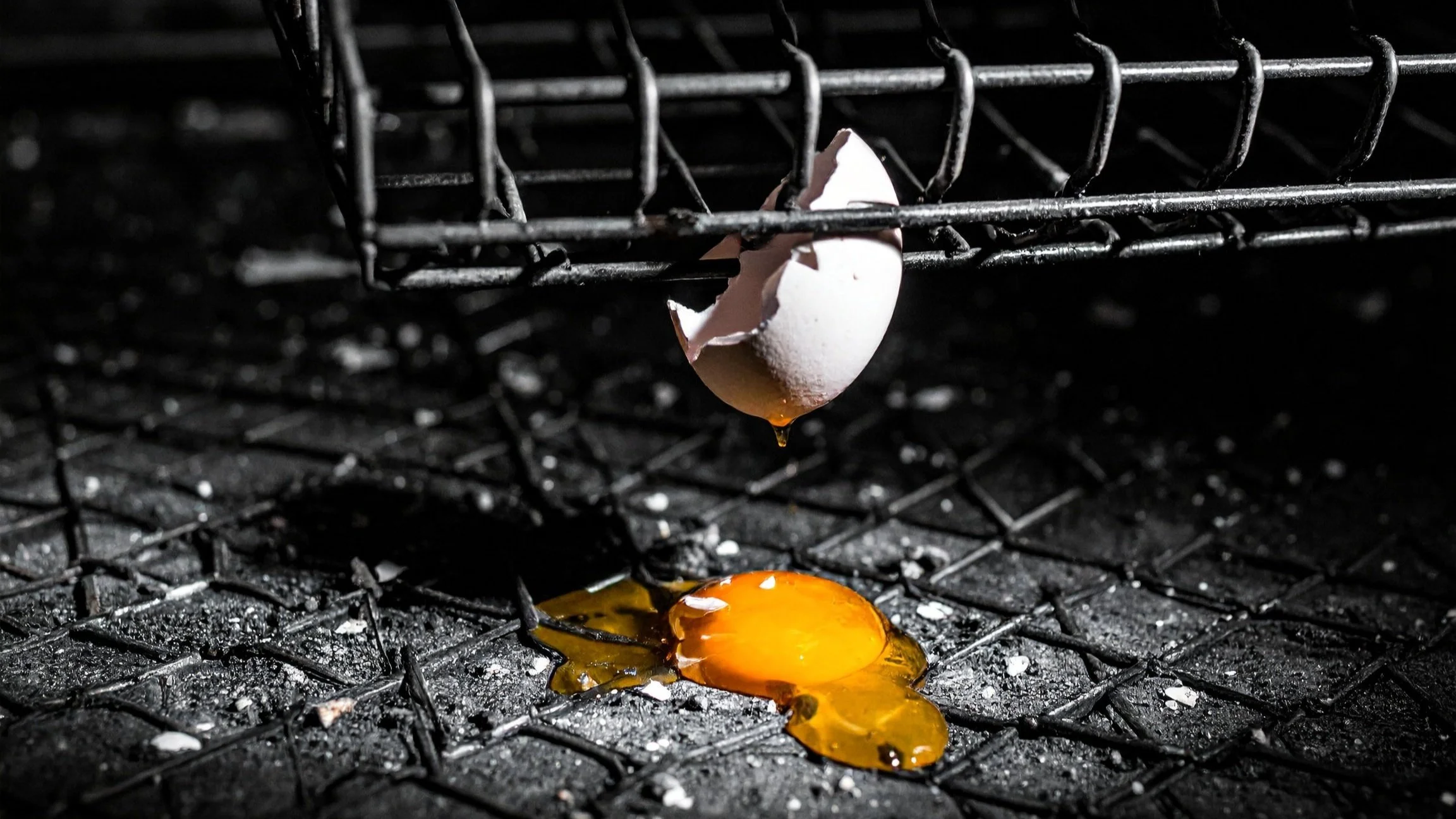
We could save billions of lives each year, but instead, society is focusing on how to kill them in a kinder way.
In our previous post on in-ovo sexing, we discussed these emerging technologies and their role within the egg production apparatus, demonstrating how they perpetuate rather than eliminate the suffering inherent to this industry.
Sentient's recent exposé on ‘Kipster’'s calculated entry into the US market, complete with their carefully marketed pledge to raise male chicks for meat, compels us to revisit this critical issue. What we're witnessing is nothing short of a co-optation of our movement's language and moral urgency. This post will expose what actually happens to male chicks under these new technologies and why every welfare reform ultimately fails to liberate animals from commodification.
From Exposing Cruelty to Comforting Labels: How the Industry Reframes the Debate
Few cruelties in the egg industry are as publicized as the mass culling of male chicks.
For years, activists have shared shocking footage of newborn chicks falling into grinders or suffocating in sacks, forcing the public to confront the hidden violence behind every carton of eggs.
Now, tech companies and egg producers are racing to market in-ovo sexing technologies that promise to “spare” male chicks by destroying them before they hatch.
While activists use the horror of chick culling to urge people to ditch eggs, these companies seize the moment to offer comforting labels and welfare promises, letting consumers believe their conscience can rest easy.
The egg industry is quick to adopt buzzwords: “no-kill eggs,” “cull-free,” “humane eggs.” Certification programs like ‘Hatch Check’ in the US reinforce these claims, but the reality is far less comforting.
This marketing works because most consumers don't know the details. While 82% of people say they'd prefer “no-kill” eggs, only 11% know male chick culling is standard practice. The industry relies on this gap, using emotional language to soothe consumer guilt while the fundamental ethical problems remain untouched.
Even ‘Kipster’, a company often cited for its commitment to raising male chicks, recently told Sentient that in-ovo sexing is only a temporary solution in the U.S., openly acknowledging that destroying male eggs is a shortcoming compared to their desired goal of raising males for food.
This shift isn't about ending cruelty. It's about moving it out of sight and selling the illusion of cruelty-free.
What Really Happens to Male Chicks: The “Kinder” Killing
In-ovo sexing determines the sex of chicken embryos inside fertilized eggs before hatching, allowing hatcheries to remove male embryos between days 4 and 13 of incubation. The technology uses various methods like optical scanning, genetic analysis, or experimental sound wave treatments. This timeline is significant, as scientific consensus suggests chicks begin to develop pain perception around day 13, which companies use to justify early destruction as more “humane.”
Here's what actually happens to those male embryos the industry claims to “spare”:
Crushed and processed as eggs: The overwhelming majority of male eggs identified by in-ovo sexing are destroyed before hatching and processed into animal feed, pet food, or protein powder.
‘Respeggt’ (Germany/Europe/US) uses the Seleggt Circuit to extract fluid from eggs on day 9, identifies male embryos, and removes them for processing into animal feed.
‘In Ovo’ (Netherlands) uses their “Ella” system to sample egg fluid on day 9, with male eggs also processed for feed.
‘CHEGGY’ (Germany/US) uses hyperspectral imaging for brown eggs, with male embryos removed and processed for animal feed.
‘Orbem’ (Germany) employs AI and MRI to identify sex by day 12; male eggs are processed before hatching.
Raised for meat (rare): Some companies, like ‘Kipster’ (Netherlands/US), have trialed raising male chicks for meat. However, this is rare and not scalable due to high costs, poor feed efficiency, and lack of market demand for rooster meat. Even ‘Kipster’ has now switched to in-ovo sexing in the US, citing infrastructure and economic barriers.
Turned into hens (experimental): ‘SOOS Technology’ (Israel/US) is piloting a method to convert genetic males into egg-laying hens using sound waves. This is still experimental and not commercially widespread.
No matter the method, the reality is clear: male chicks are not “spared.” They are simply eliminated earlier, out of sight, and often repurposed for economic gain. The industry's new language of “no-kill” and “humane” eggs is a marketing strategy, not a moral revolution.
Why Welfare Reforms Won't End Animal Suffering
In-ovo sexing exemplifies how welfare reforms serve industry interests rather than genuine animal protection. Despite the new marketing and technological advances, the ethical and economic realities remain unchanged.
Systematic destruction persists. Whether at day 1 or day 13, male lives are eliminated for economic efficiency. The timing changes, but the commodification of life continues unabated.
Female suffering persists. Hens on commercial egg farms endure painful debeaking, severe confinement, and slaughter when productivity declines. These females see no benefit from “no-kill” marketing. Their lives remain just as confined, just as painful, just as short.
Suffering of the parent flocks persists. These breeding birds, the unseen origin of every egg, live stressful and restricted lives. Hens and roosters bred specifically for fertile egg production endure chronic confinement, minimal freedom, and relentless reproductive demands. Their conditions remain unaffected by the shift to in-ovo sexing.
Companies adopt in-ovo sexing for profit, not compassion. It reduces costs, increases efficiency, and creates new revenue streams from processed male eggs. In-ovo sexing adds less than 1 cent per egg to production costs but offers significant savings in labor, feed, and space.
This pattern repeats across all animal industries: cage-free eggs, grass-fed beef, humane slaughter.
Each “improvement” allows consumers to continue participating in animal exploitation with reduced guilt, providing the illusion of progress while maintaining the profitable status quo.
The language changes, but the fundamental relationship remains the same: animals exist for human profit.
The Real Solution
But you have the power to step outside this system entirely. Every time you choose compassion over convenience, you're taking a stand. If you truly care about animal well-being, please look beyond the labels and marketing promises.
The real solution to ending the suffering of hens isn't a new technology or a comforting promise. It's refusing to participate in a system built on animal exploitation. It's recognizing that no matter how we dress it up, using animals for food means treating them as commodities rather than the individuals they are.
You don't need to wait for the industry to change. You can change right now, with your next meal, your next shopping trip, your next choice. The animals are counting on us to see through the illusion and choose a different path entirely.
Additional Information
-
What is in-ovo sexing?
In-ovo sexing is a technology that determines the sex of a chicken embryo inside a fertilized egg before hatching, allowing hatcheries to remove male embryos before they hatch into chicks.
What happens to the male embryos?
They are removed from incubation between days 4 and 13 and destroyed, then typically processed into animal feed or protein powder. Some companies have trialed raising these males for meat or converting them into egg-laying hens, but these approaches are rare or experimental.
Are “no-kill” or “cull-free” eggs cruelty-free?
No. These labels only mean no chicks are killed after hatching. Male embryos are still destroyed, just earlier. The ongoing suffering of hens and broader exploitation continue unchanged.
Is in-ovo sexing legally required?
Only a few countries (Germany, France, and soon Italy) have banned male chick culling by law, pushing producers toward in-ovo sexing. Elsewhere, adoption is voluntary or market-driven.
Is this practice common worldwide?
Europe leads globally, with over 28% adoption. North America is just beginning to adopt commercially, and most of the world still relies on traditional chick culling.
Does in-ovo sexing increase the price of eggs?
Slightly. The additional cost to consumers is minimal—typically less than 1 cent per egg—but producers see economic benefits through efficiency gains.
-
Liquid-Based Analysis Technologies
Respeggt (Seleggt Circuit) represents the most established commercial technology, operational since 2018. Using DNA analysis of allantoic fluid extracted on day 9 of incubation, male eggs are removed and processed into animal feed or protein powder. The technology now operates across multiple European countries and entered the US market in 2024 through partnerships with Kipster and other producers.
In Ovo’s Ella System employs a similar liquid sampling approach but uses proprietary biomarkers rather than DNA analysis. Operating since 2020, male eggs identified by this system are processed into animal feed. The technology processes 4,800 eggs per hour with over 98% accuracy.
PLANTegg utilizes PCR-based DNA analysis from allantoic fluid samples. Male eggs are processed into “high-quality feed” according to company specifications. The technology is owned by HatchTech Group and has been operational in Europe since 2020.
Imaging-Based Technologies
Orbem’s Genus Focus employs MRI and AI technology to detect sex differences in embryonic development on day 12 of incubation. Male eggs are processed into animal feed. The system can process up to 24,000 eggs per hour with modular design allowing scalability.
Agri Advanced Technologies’ CHEGGY uses hyperspectral imaging to identify sex based on feather color differences, working exclusively with brown layer breeds. Male eggs are processed into animal feed. The technology entered the US market in December 2024 through NestFresh, with eggs from in-ovo sexed hens reaching consumers in mid-2025.
MatrixSpec’s HyperEye represents the earliest sexing technology, capable of determination on day 4 of incubation. Currently in commercial validation in Canada, male eggs would be processed into animal feed. The system claims processing speeds of 30,000+ eggs per hour.
Emerging and Alternative Technologies
Sensit Ventures’ VOC Technology uses volatile organic compound detection to “sniff” sex-specific chemicals emitted through eggshells. Still in early-stage development, male eggs would be processed into animal feed if commercialized.
Omegga’s Spectroscopic Imaging develops non-invasive optical methods for sex detection, currently in pilot testing in Germany. Male eggs would be processed into animal feed.
SOOS Technology presents a unique approach using sound waves to convert genetically male embryos into phenotypically female chickens. Rather than destroying male embryos, this technology aims to create egg-laying birds from genetic males. Currently in limited commercial trials in the US and Israel.
-
Europe: The Pioneer Market
Europe leads global adoption with 20-28% market penetration as of 2024. Legal bans on male chick culling in Germany (2022), France (2023), and Italy (2026) have driven rapid adoption. Over 110 million of the EU’s 393 million laying hens were hatched using in-ovo sexing technology by April 2025.
The annual cost of in-ovo sexing in France alone ranges between €40-50 million, creating disputes between producers and retailers over cost-sharing. Despite these challenges, technological improvements have reduced costs from €4.00 per male bird in 2020 to €3.10 in 2024.
North America: Early Commercial Deployment
The United States saw its first commercial in-ovo sexed chicks in December 2024, with NestFresh becoming the first US producer to market such eggs. Kipster, the second US adopter, began using Respeggt technology in 2025, marking a significant shift from their previous commitment to raising male chicks.
The United Egg Producers launched the “Hatch Check” certification program in 2025, providing standards for in-ovo sexing verification. This represents industry-led adoption rather than regulatory mandates, with major retailers like Walmart including in-ovo sexing in supplier guidelines.
Canada is developing its own technology through the HyperEye system, with commercial validation underway and planned deployment in 2025.
Other Markets
Switzerland achieved industry-wide adoption through voluntary agreements, with both major hatcheries implementing in-ovo sexing for 100% of production by 2025. Norway reached 22% market penetration through voluntary adoption. Australia and the UK remain in early pilot stages, with limited commercial deployment.
Further Reading
How to Replace Eggs: Recipes and Resources
Ready to Go Vegan? Vegan Bootcamp
Debunking the Most Common Egg Industry Myths – Part 2
In Part 2 of our myth-busting series, we uncover how the egg industry manipulates hens’ biology, environments, and even marketing to hide the suffering behind every egg.
Welcome to Part 2 of our myth-busting series on the egg industry.
In Part 1, we tackled common misconceptions about hens and eggs. Now we’re exploring myths about hen biology, manipulated living conditions, and misleading marketing claims, such as “hens naturally lay eggs daily,” or “dark yolks indicate better welfare.”
If you've ever wondered how “natural” eggs really are, keep reading.
5. “Only happy hens lay eggs.”
This common belief sounds comforting, but it’s misleading.
Laying eggs is a biological function, not a reliable indicator of wellbeing. A hen may continue to lay even when her body is under immense stress. This is because hens have been bred to be highly productive, and their physiology allows them to keep laying despite poor conditions.
In commercial farms, hens face constant stress—from overcrowded barns, rough handling, and noise to sudden changes in temperature, light, or feed. These stressors can cause hormonal spikes or chronic health issues like weakened bones and suppressed immune function. Yet many hens keep laying through it all due to a process called allostasis: their bodies adapt to stress to maintain egg production—even when it takes a toll.
Egg output doesn’t mean a hen is thriving. In fact, hens in less stressful backyard environments might lay fewer eggs but live much longer and healthier lives. Meanwhile, commercial hens might keep laying while silently suffering from parasites, poor nutrition, or reproductive exhaustion.
The bottom line: consistent egg laying is not a sign of happiness or good health—it’s often a sign of survival in a system that prioritizes output over wellbeing.
6. “Hens lay an egg every day—it’s the most natural food to eat”
The egg industry likes to suggest that daily egg-laying is simply what hens do. It sounds natural, even effortless. But this image is far from the truth.
Today’s hens are the result of decades of intense selective breeding. While their wild ancestors laid around 12 eggs per year, modern hens have been engineered to produce between 250 and 330 eggs annually. In some cases, industry breeding targets push for as many as 500 eggs per hen in a single laying cycle.
This level of output is anything but natural. It puts enormous strain on the hen’s body and leads to serious health issues, including osteoporosis, skeletal depletion, and reproductive tract problems. After just 72 to 100 weeks of this exhausting cycle, the hens are considered no longer profitable and are sent to slaughter.
The truth is, hens do not lay eggs every day because it is natural. They do it because they have been genetically manipulated to meet the demands of a system that sees them as egg-producing machines.
What we call “natural” is actually the result of extreme intervention in their biology.
👉 Learn more.
7. “Hens need sunlight to lay eggs—egg farms are bright places.”
The industry loves to show sun‑drenched barns, giving the impression that hens bask in natural daylight. In reality, sunlight is not required. What matters is control.
Hens are photoperiod‑sensitive birds; their bodies start an egg‑laying cycle when they receive roughly 14 to 16 hours of light. Farmers replicate spring and summer by flipping on low‑watt bulbs and setting them on a timer. No sun needed—just electricity.
Most barns run at 10 to 20 lux, about as bright as a dim hallway closet. A sunny day outside reaches over 80 000 lux. In these gloomy sheds, dawn and dusk are faked, and red or orange lights are sometimes added to stimulate reproductive hormones. The goal is simple: more eggs, more quickly, with little regard for the toll on the hens’ bodies.
This artificial schedule keeps hens producing nonstop while masking the harsh, cramped reality inside the barn. Bright marketing photos do not match the dim truth.
8. “A dark yolk means a hen is happy and healthy.”
Egg cartons often feature deep, vibrant yolks to suggest freshness, better taste, and healthier hens. This appealing imagery, however, is purely marketing.
Egg yolk color mainly depends on diet—specifically, carotenoids from plants like corn, carrots, or alfalfa. In nature, these pigments produce a range of yolk shades from pale yellow to deep orange. But egg producers commonly add natural feed additives to achieve consistently dark yolks for consumer appeal, regardless of actual hen wellbeing or egg quality.
In fact, yolk color does not reliably indicate better nutrition, superior taste, or humane living conditions. Even hens confined in cages can produce eggs with deep-colored yolks if their diets include certain pigments.
Ultimately, yolk color is a manipulated illusion, created by producers to mask cruel practices and boost consumer appeal—not evidence of happy or healthy hens.
The egg industry carefully shapes the way we see hens, eggs, and farming practices. From controlling light exposure to force egg production, to adding pigments to feed to influence yolk color, much of what we are told is a marketing illusion.
These systems are not designed to support animal wellbeing. They are designed to maximize profit, often at the cost of the hen’s health and life.
Once we begin to question what we’ve been taught, the truth becomes hard to ignore. Hens are not machines, and eggs are not a harmless food. They are the product of a system built on control, manipulation, and suffering.
If we want a kinder world, it starts by leaving eggs off our plates.
Sources & Further Reading
Debunking the Most Common Egg Industry Myths – Part 1
How to Replace Eggs: Recipes and Resources
Ready to Go Vegan? Vegan Bootcamp
Debunking the Most Common Egg Industry Myths – Part 1
Think eggs are harmless? These 4 myths hide the brutal truth about the egg industry.
As advocates for chickens in the egg industry, we’ve heard it all. Over and over again, the same “gotcha” comments pop up beneath our posts—seemingly simple statements that attempt to justify eating eggs. But when we dig a little deeper, these claims start to unravel.
In this two-part series, we’re breaking down the most common myths we encounter. Here’s Part 1.
1. “No chickens are killed for eggs.”
This is one of the most common misconceptions we encounter—and one of the most misleading.
The idea that eggs are a harmless byproduct rests on the belief that no lives are taken in the process. But the egg industry depends on killing to function. Both hens and male chicks are routinely killed as part of standard egg production practices.
Every egg-laying hen is eventually slaughtered when her production slows—usually before she even turns two years old. Her short life is spent in confinement, her body pushed to produce egg after egg at a rate far beyond what nature ever intended. This extreme overproduction leads to serious health issues, including reproductive disorders, brittle bones, and exhaustion.
But the killing starts even earlier.
Because male chicks don’t lay eggs and aren’t profitable for meat, they’re considered useless by the industry. Just hours after hatching, these baby birds are typically killed—ground up alive, gassed, or suffocated in trash bags. Globally, this adds up to about 6 billion male chicks killed every single year. Their lives are discarded before they’ve even begun.
If every hen came from a hatchery, so did her brother—and he didn’t make it past his first day.
So yes, chickens are absolutely killed for eggs. Not just eventually. From the very beginning.
2. “Male chicks aren’t killed—they’re raised for pet food.”
This claim attempts to gloss over one of the egg industry's most brutal truths: the systematic culling of male chicks.
Because male chicks don’t lay eggs and aren’t bred to grow quickly enough for meat production, they are considered worthless to the industry. Unlike other animal-based food sectors, egg production depends on hatching fertilized eggs without knowing the chick’s sex in advance. As a result, chicks must be born first, then sorted by sex—an operation that leads to the immediate killing of males.
Within hours of hatching, male chicks are discarded—often gassed or ground alive. Their deaths are not a rare exception, but a standard industry practice carried out for the sake of efficiency and profit. Weak, injured, or deformed chicks—regardless of sex—are also culled in this process.
Some argue that these chicks are used for pet food, but even if that’s occasionally the case, it doesn’t make the practice ethically acceptable. Raising them for a few more weeks only prolongs their suffering before an inevitable, premature death. Every path leads to slaughter.
Even emerging technologies like in-ovo sexing—marketed as a compassionate alternative—do not address the suffering of the hens themselves or the parent birds used to produce fertilized eggs. The grim reality remains: male chicks are treated as disposable by-products of an industry built on reproductive control and exploitation.
👉 Learn more.
3. “Hens lay eggs anyway—it would be wasteful not to eat them.”
At first glance, this argument may seem practical. But it completely overlooks the reality of how hens come to be in egg production in the first place.
Modern egg-laying hens are not backyard wanderers casually leaving eggs behind. They are bred, purchased, and kept for one reason: to produce eggs—hundreds of them per year. This isn’t a natural occurrence; it’s the result of decades of selective breeding and manipulation. Unlike wild birds who lay just a handful of eggs to raise chicks, today’s hens have been genetically engineered to hyperovulate almost daily, far beyond what nature ever intended.
This unnatural burden takes a serious toll on their bodies. Chronic reproductive strain leads to health problems like inflammation, hunger, pain, and exhaustion. And when their production slows—typically before they even turn two—they’re slaughtered.
Using the argument “they lay them anyway” ignores that these hens are bred to suffer. Their existence has been engineered for profit, not for life.
4. “I only buy locally farmed, free-range eggs—these hens have a good life.”
This comforting belief—that buying “free-range,” “organic,” or “local” eggs means supporting happy, well-cared-for hens—is widespread, but it doesn’t hold up under scrutiny.
Egg labels vary greatly by country and often mislead consumers. In Canada and the United States, for example, “free-range” simply means the hens have some outdoor access. How much? That’s usually unspecified. In the UK and Australia, the standards are slightly more stringent, but still allow wide variation. Meanwhile, “organic” eggs might come from hens fed pesticide-free grain and granted limited outdoor time, but even these labels don’t guarantee humane or natural conditions.
What’s more, “local” farms often mirror the same industrial practices used by large-scale producers. Small scale doesn’t always mean kind. These hens are still products of the same hatcheries where male chicks are killed at birth, and the females are bred for unnatural levels of egg production. Their high output causes painful health issues like osteoporosis and reproductive tract problems, and once their egg production slows, they are slaughtered—often before they turn two.
Labels may offer the illusion of care and transparency, but they do little to alter the deeper problem: the systemic exploitation of hens for profit.
The egg industry is built on decades of carefully maintained myths—claims that eggs are harmless, natural, or humane. But the facts tell a different story. From the systematic killing of male chicks and the relentless exploitation of hens’ reproductive systems to the misleading comfort of free-range labels, we’re often sold a fantasy far removed from reality.
And these are just the beginning.
In Part 2 of our myth-busting series, we’ll take a closer look at some of the most persistent misconceptions around hen biology and egg marketing—like why hens don’t naturally lay an egg a day, how artificial lighting is used to manipulate their cycles, and whether a dark orange yolk really means anything about the life the hen lived.
If you’ve ever been told eggs are the most natural food there is, stay tuned. The truth is far more engineered.
Sources & Further Reading
Debunking the Most Common Egg Industry Myths – Part 2 (coming June 2025)
How to Replace Eggs: Recipes and Resources
Ready to Go Vegan? Vegan Bootcamp
From Cute to Cruel: What Spring Celebrations Mean for Chicks
Spring may symbolize new life, but for millions of chicks, most Easter traditions bring only suffering, neglect, and death.
Every spring, cultures around the globe celebrate the arrival of spring and Easter with vibrant colors, playful traditions, and the hope of renewal. But behind the festive imagery lies a harsh reality: many of these practices inflict cruelty on some of the most vulnerable creatures—chickens and baby chicks.
In this post, we delve into the unethical treatment of birds during these celebrations, exposing dark truths that most people overlook.
Dyeing Chicks for Easter: The Hidden Cruelty Behind Colorful Traditions
Every spring, brightly colored chicks appear in markets, pet stores, social media posts, and children's Easter baskets. With their pastel-dyed fluff in shades of pink, blue, green, and yellow, they may look festive and fun. But behind these artificially bright hues lies a disturbing tradition rooted in commercialization, animal suffering, and the trivialization of life.
A Tradition With Disturbing Roots
The practice of dyeing chicks for Easter likely stems from the older custom of dyeing Easter eggs—both representing themes of new life and rebirth. It gained popularity in the United States during the 1960s and 1970s, though references date back as early as the 1880s. The trend emerged as a commercial tactic to boost seasonal sales by marketing chicks as novelty gifts for children. Similar practices are found in countries like India, Malaysia, and China, where dyed chicks are still sold in markets as inexpensive toys or festive decorations.
The Process: Hidden Suffering for the Sake of Aesthetic
Distressing Methods: Dyeing often involves spraying or dunking fragile chicks into tubs of artificial coloring. In some cases, dyes are injected directly into the egg before hatching. Chicks are handled roughly—tossed into plastic bins, held down, or clumped together in large numbers.
Health Risks: The dyes may contain unregulated or toxic chemicals. Absorbed through the skin or inhaled, they can irritate the chicks’ delicate systems. The process causes stress, injury, and often long-term health issues—though few chicks live long enough for this to be studied.
Emotional Toll: Baby chicks are naturally vulnerable. The stress of being separated from their mothers, handled excessively, and altered against their will causes both psychological and physical suffering.
This cruel tradition not only represents animal abuse but reinforces a troubling attitude—where life is trivialized for the sake of entertainment.
Still Happening Today—Legally and Illegally
In the United States, dyeing chicks is illegal in about half of the states, but legal in the other half under certain conditions. For example, Florida briefly repealed its ban in 2012 before reinstating it a year later. Enforcement varies, and dyed chicks can still be found in states where the law remains vague or unenforced.
In New York City, where dyeing and selling colored animals is illegal, the ASPCA seized 49 dyed chicks from a Brooklyn pet store. The birds were being sold as Easter novelties, and half were identified as male—also illegal to keep within city limits. The chicks were later given sanctuary.
Globally, the tradition remains especially common in developing countries, where animal welfare laws are either lacking or poorly enforced. In many regions, the practice continues despite criticism from local and international animal advocacy groups.
The Aftermath: From Holiday Highlight to Abandoned Animal
Once Easter is over and the chick's bright color fades—or they begin to grow into adult birds—many families realize they are not equipped to care for a chicken who can live 10 to 15 years. The result? These animals are often discarded, abandoned in parks or backyards, or surrendered to overwhelmed shelters. Few survive, and many are euthanized or fall victim to predators.
This tradition not only reflects cruelty but also reinforces a mindset that treats sentient beings as disposable commodities. When animals are sold for a fleeting holiday aesthetic, their suffering is hidden behind pastel packaging and seasonal cheer.
Classroom Chick Hatching Projects: Why They Teach the Wrong Lesson
Hatching projects in schools are commonly marketed as enriching educational experiences, designed to teach young students about biology, responsibility, and the miracle of life. However, behind the well-meaning intent lies a troubling truth: these classroom experiments frequently harm the very creatures they aim to celebrate, sending unintended messages about animal disposability that persist well beyond the classroom walls.
When Education Betrays Ethics
Misguided Experiments: Classroom chick hatching projects in the United Kingdom, United States, and Canada often aim to teach children about life cycles. However, the reality is far more grim.
Developmental Abnormalities: Natural incubation involves a mother hen’s careful rotation of eggs—a process that cannot be easily replicated in schools. The result? Ill and deformed chicks that endure developmental suffering.
Unresolved Consequences: With no long-term plan for the chicks, schools frequently contribute to a cycle of neglect and abandonment. This practice teaches children that animals are disposable, undermining the values of compassion and respect for life.
Animal welfare organizations have repeatedly condemned these projects. Yet despite ongoing concerns, hatching chicks remains a common practice each spring—not only in schools, but also at home, where online tutorials now encourage families to hatch chicks using recycled materials, egg cartons, and makeshift incubators, further normalizing the idea that life is something to be created, observed, and discarded for entertainment.
Compassionate Alternatives
Thankfully, there are kinder, more responsible ways to teach children about life cycles and bird development. ‘Hatching Good Lessons’, a guide by ‘United Poultry Concerns’, offers engaging, age-appropriate activities for educators and parents. The booklet includes a variety of creative lessons for students in grades K–6 and highlights the ethical issues involved in live-animal hatching projects.
Gifting Live Chicks: An Easter Tradition with Serious Consequences
Gifting live chicks for Easter is often portrayed as a charming and innocent tradition, especially appealing to families with young children. These small, fluffy birds symbolize renewal, innocence, and joy—qualities perfectly aligned with springtime celebrations. Yet this tradition, while seemingly harmless, leads to serious consequences for the animals involved.
Many families underestimate the significant care and attention chickens require. Once the initial excitement fades and the chicks begin to grow, the reality of feeding, housing, and nurturing these animals sets in. Unprepared caregivers frequently abandon chicks or surrender them to shelters, where their futures remain uncertain. Animal welfare groups like ‘The Humane Society’ have highlighted this issue, noting a consistent increase in abandoned chicks shortly after Easter each year.
The practice of gifting live animals for seasonal amusement reinforces a damaging perception: that the value of a living creature depends solely on its novelty or entertainment value. By treating them as seasonal toys, we not only compromise their welfare but also perpetuate a culture of disposability toward living beings.
Compassionate Alternatives
Instead of gifting live animals, consider compassionate alternatives—such as plush toys, books, or activities—that celebrate the spirit of spring without contributing to animal neglect and abandonment. By choosing responsibly, we teach empathy, kindness, and the true meaning of caring for animals.
Easter Egg Demand: How Spring Celebrations Fuel Suffering
The Hidden Cost of Easter Eggs
The Easter season's surge in egg demand intensifies pressure on industrial production systems, which prioritize efficiency over animal wellbeing. While dyed or decorated eggs symbolize renewal and joy in cultural traditions, their industrial supply chain exposes a darker reality: large-scale operations often subject hens to overcrowded cages, debeaking without pain relief, and premature slaughter once productivity declines. This disconnect between festive symbolism and industrialized cruelty highlights a system where profit routinely outweighs ethical considerations.
Harmful Practices in Egg Production
Male Chick Culling
Male chicks face immediate disposal after hatching, deemed worthless in an industry that values only egg-laying females. Common methods like maceration (grinding alive) or suffocation highlight a chilling disregard for life, reducing sentient beings to mere “byproducts” of industrial efficiency. This routine elimination underscores a system that prioritizes profit margins over ethical responsibility.Debeaking and Confinement
Female chicks endure debeaking—a traumatic, unanesthetized procedure where sensitive beak tissue is sliced or burned—to prevent stress-induced pecking in overcrowded environments. Hens then spend their lives in confinement: battery cages restrict movement to a space smaller than an iPad, while “cage-free” systems often mean overcrowded warehouses where natural behaviors like dust-bathing remain impossible. These conditions create physical and psychological suffering, as birds are denied even basic species-specific needs.
Compassionate Alternatives
We believe there are always alternatives to products that perpetuate animal suffering. Consider embracing compassionate choices this Easter by exploring plant-based decor alternatives, such as wooden, ceramic, or papier-mâché eggs, or creative spring-themed crafts using flowers, seeds, or recycled materials. For inspiration, revisit our Last Year’s Easter Post, which shares creative ideas for egg-free celebrations, from natural dye experiments to symbolic rituals that honor renewal without exploitation.
Celebrate without Cruelty
As spring returns each year, so do the traditions we associate with it—eggs, chicks, baskets, and bright colors. But behind these familiar symbols lie stories of suffering, neglect, and exploitation. Chick dyeing, school hatching projects, live animal gifting, and the increased demand for eggs each Easter all point to a troubling truth: animals are still being used as decorations, experiments, and commodities in the name of celebration.
But it doesn't have to be this way. We can choose compassion. We can teach children to value life without causing harm. We can celebrate renewal without participating in cruelty.
This Easter, please leave chicks out of your shopping cart, eggs off your plate, and cruelty out of your celebrations. Choose alternatives that reflect not just the beauty of spring, but the kindness we all hope to carry into the world.
Sources & Further Reading
The Suffering of the Hens in the Egg Industry: Life of a Hen
How to Replace Eggs: Recipes and Resources
Ready to Go Vegan? Vegan Bootcamp
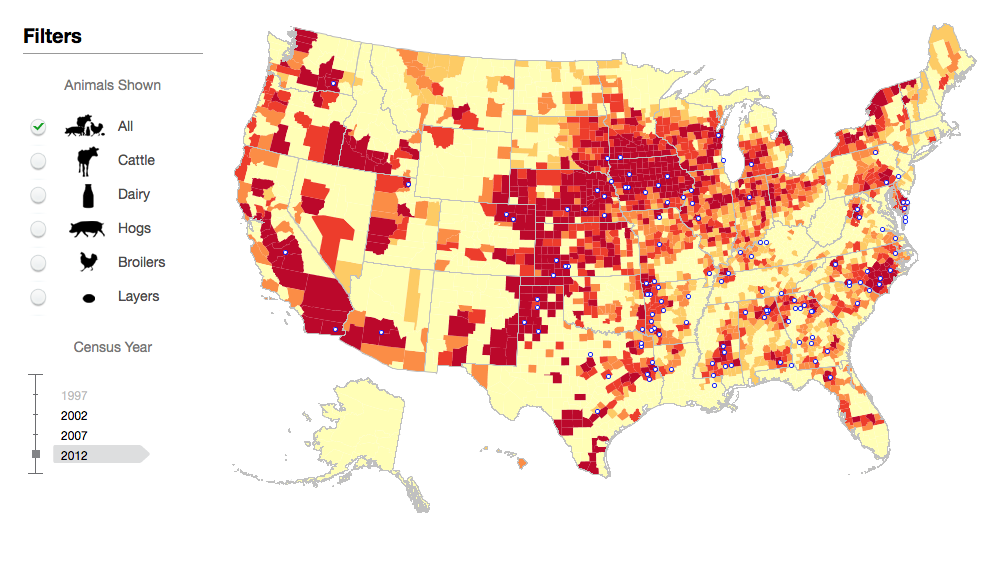
Factory Farm Map
Explore our Factory Farm Map to discover the true extent of factory farms and egg-laying hen facilities across the U.S., and understand their impact on animals, communities, and the environment.
Have you ever wondered, “Where are factory farms located?” or searched for “factory farms near me”? The interactive Factory Farm Maps from Food & Water Watch's Factory Farm Nation campaign offers eye-opening insights.
This comprehensive livestock farming map vividly illustrates what rural communities have experienced for decades:
“We wanted to illustrate something that people in rural America have known for a long time: independent family farms are being replaced by factory farms, and these facilities are overwhelming some regions of the country. This method of raising livestock harms rural communities and puts small family farms out of business. It takes away consumers’ choice at the grocery store, makes food safety problems happen on a larger scale, and creates more waste than the surrounding environment can adequately absorb. It keeps animals packed tightly together inside buildings and relies on overusing antibiotics, creating a perfect breeding ground for antibiotic-resistant superbugs that can make all of us sick.”
Why Factory Farming Matters
Egg-Truth firmly believes that no form of farming is acceptable when it involves exploiting animals. However, factory farms clearly represent the most severe conditions animals endure. According to the Factory Farm Nation Project:
“Factory farms also are detrimental to the animals themselves. Most factory-farmed hogs and chickens have no access to the outdoors and never see daylight. Beef cattle and dairy cows spend time outside, but they are confined to feedlots with no access to pasture or grass, which is what they are built to eat. The lack of outdoor access, inability to express natural behaviors, health problems and stress caused by production practices, and breeding designed to maximize weight gain or egg and milk production take a toll on animal welfare.”
At Egg-Truth, we recognize that these maps don't just depict locations—they reveal a powerful truth: Choosing plants over animal products isn’t simply a personal dietary preference. It profoundly impacts animal lives, human health, and environmental sustainability.
Using the Factory Farm Map
Curious about the scale of egg production and factory farms near you? Navigate the Factory Farm Map by state and county to discover detailed data on local egg-laying hen operations and other livestock industries.
Livestock Farming Map: Beyond the Hen
While our focus at Egg-Truth is predominantly on hens, this map also covers other types of livestock. Dairy cows and beef cattle might have some access to the outdoors, but they are mostly confined to feedlots, severely restricting their natural behaviors. To understand more about factory farming's impact on cows on dairy farms, check out our sister website Dairy-Truth.
Explore More with Egg-Truth
Understanding the severity of factory farming is the first step. From here, you can dive deeper:
Learn about the reality hens in the egg industry face daily.
Explore the environmental consequences of egg production.
Find practical guidance for transitioning to plant-based alternatives.
Every decision counts. When we leave eggs off our plates, we take meaningful action against animal cruelty, environmental damage, and health risks posed by factory farming.
Together, let's choose compassion. Please leave eggs off your plate.
The Age of the Chicken: A Legacy Written in Bones
This post reveals how industrial chicken farming is rewriting our planet’s geological record, marking the dawn of the "Gallocene"—an era defined by the mass fossilization of chicken bones.
Image: weanimals.org
In a distant future—long after our civilization has faded—scientists might sift through layers of Earth and make a startling discovery: trillions upon trillions of chicken bones, fossilized in landfills, their altered shapes and unnatural densities forever etched into the planet’s geological record. These bones—remnants of the chickens bred, used, and discarded by the egg and meat industries—will tell a story of human dominance, consumption, and neglect.
Some scholars have already named this era the “Poultryocene” or “Gallocene”—the “Age of the Chicken”. Not because chickens have thrived, but because they’ve been bred in such astronomical numbers that they have literally reshaped Earth’s biosphere. At any given moment, there are over 23 billion chickens on Earth, far surpassing the population of any other land animal.
A Bird We Barely Know
Ironically, while we live in an apparent “Age of the Chicken,” most of us rarely see living chickens at all. In supermarkets, we find sanitized packages of wings and drumsticks. On egg cartons, we see idyllic illustrations of hens roaming free. The reality is drastically different: in the meat industry, chickens have been bred to grow so fast they suffer crippling health problems, and in the egg industry, hens are pushed to ovulate incessantly at great detriment to their health.
Modern “broiler chickens” are engineered to grow three times faster and pack on five times the biomass compared to chickens of the early 20th century. This extreme breeding is all about profit: more white breast meat in less time. Typically, these birds are slaughtered at just five to seven weeks old, whereas a wild fowl might live up to eleven years. Because their hearts and lungs can’t keep pace with such explosive growth, many chickens experience heart failure, respiratory issues, and severe leg pain if allowed to live beyond the typical slaughter age. Even in sanctuaries that rescue them, so-called “broilers” often struggle with chronic health issues and rarely reach old age.
Meanwhile, “layer chickens” have been bred to lay about 500 eggs a year, dwarfing the mere 10 to 15 that their wild ancestors once laid—only in spring. Each ovulation can be fraught with pain or life-threatening complications. Conditions like egg yolk peritonitis (when egg material leaks into the body cavity), cloacal prolapse, and ovarian cancers are tragically common. What nature intended as a cyclical, occasional process has become a daily production line, inevitably ending in chronic pain or premature death.
Fossilized Footprints of Suffering
All these trillions of chickens—confined, bred to extremes, and slaughtered—will leave their mark on Earth’s geological record. Their bones, piled in landfills, will serve as a stark signal that something colossal and troubling took place. Future scientists could easily identify a massive surge in chicken fossils dating from the mid-20th century onward, silent witnesses to industrial-scale breeding and hidden cruelty. Unlike dinosaur remains—whose disappearance marked natural catastrophes—these modern chicken fossils would reveal a disaster of our own making: one born of human exploitation. Their bones would testify to how we altered their DNA, cramped them into factory farms, and discarded them in unfathomable numbers.
Despite the overwhelming presence of chickens in our food system, few consider them beyond their role as commodities. We call this the “Age of the Chicken” not because we honor or celebrate these birds, but because in death they overwhelm our culture—stripped, sliced, and served before we ever truly acknowledge their lives.
Chickens are remarkable creatures, however, —curious, intelligent, and socially complex. They forge deep connections, navigate intricate social hierarchies, and revel in pleasures like dust bathing and nesting. They recognize one another’s faces, communicate with genuine empathy, and are devoted mothers who bond with their chicks both before and after hatching. Yet in the industrial egg and meat sectors, these natural behaviors are systematically suppressed. Confined to overcrowded sheds, denied meaningful interactions, and forced into unnatural breeding and egg-laying cycles, chickens are reduced to mere cogs in the relentless machinery of food production. The industry strips them of their inherent dignity, turning vibrant, sentient beings into products with a singular purpose—profit.
If we genuinely live in the “Age of the Chicken,” then we owe it to these creatures to see them as more than commodities. Their lives are defined by intelligence, empathy, and social bonds—not merely by fast-growing muscles or high egg yields. Every purchase of chicken or eggs fuels an industry that prizes volume and profit at the expense of animal well-being.
Choosing Compassion
Every choice we make has consequences. One of the simplest yet most impactful ways to change the fate of chickens is to stop consuming them. This so-called “Poultryocene” doesn’t have to be a story of suffering; it can be a turning point, if we decide to honor life rather than exploit it.
Please leave eggs off your plate.
By choosing compassion, we can rewrite the legacy that future geologists—and future generations—will unearth in Earth’s layers. Let’s make sure that when they find these bones, they also find evidence of a turning tide toward empathy and respect.
Sources & Further Reading
Article Sources:
Bennett, Carys, Richard Thomas, Mark Williams, Jan Zalasiewicz, et al. “The broiler chicken as a signal of a human reconfigured biosphere,” Royal Society Open Science, 12 December 2018.
Narayanan, Yamini. “An Ecofeminist Politics of Chicken Ovulation: A Socio-Capitalist Model of Ability as Farmed Animal Impairment,” Hypatia, vol. 39, 2024.
Further Reading:
The Creation of the Modern Hen: Hen History
The Suffering of the Hens in the Egg Industry: Life of a Hen
How to Replace Eggs: Recipes and Resources
Ready to Go Vegan? Vegan Bootcamp
This post was informed by the valuable input of Chloë Taylor, whose academic expertise and research played a key role in shaping the article.
Egg-free Living: Navigating Veganuary with Sarah
Join Sarah this Veganuary as she uncovers the hidden truths of the egg industry. Discover cruelty-free alternatives, egg-free recipes, and tips on how to make your compassionate resolution last all year long.
Meet Sarah, a passionate food enthusiast diving into Veganuary—a vibrant time filled with culinary exploration and joyous laughter. In her small kitchen, friends gather to experiment with new plant-based recipes and share stories. However, as the conversation shifts towards the food system, a question that nobody can quite crack lingers—what's wrong with eggs?
As the night winds down and Sarah bids farewell to her friends, she delves into a quest for answers. It doesn't take long for her to confront the harsh realities of the egg industry. Huddled over her tablet at the kitchen table, she sifts through gut-wrenching images—layers of hens crammed into battery cages and 'cage-free' barns, their movements restricted. These creatures are sentient, Sarah discovers, possessing intelligence akin to her cherished cat 'Sergeant Fluff.' Yet, they endure suffering on a scale most wouldn't tolerate for dogs or cats. A disturbing insight hits Sarah just when she thinks she's seen enough: for every female chick fated for a life of abuse, mutilation, and malnourishment, there's a male chick denied a chance at life.
As Sarah lies in bed, reflecting on the delightful dinner with friends and the eye-opening facts she's just absorbed, she wonders—aren't eggs from small homesteads and backyard setups harmless? Surely, those hens, living outdoors with grass under their feet, are well cared for. The next morning, fueled by curiosity, she scours Insta for pictures of idyllic hen farms nearby. Amidst the many backyard chicken enthusiasts on social media who seem to have cracked the egg dilemma, she stumbles upon a woman dedicated to rescuing chickens from dire situations.
This chicken-saving advocate, once an organic and pasture-raised egg supporter, transitioned to an egg-free lifestyle after witnessing the relentless suffering inflicted by breeding. Sarah's feed becomes a revelation—hens, much like companion animals, have been artificially selected for traits deemed 'desirable' by humans. The comparison strikes a chord as she learns that, just as bulldogs face birthing challenges due to human-driven transformations, hens are ruthlessly bred to lay over 300 eggs annually—a stark increase from their ancestors' 10-15, far beyond their natural capacity. The notion of chickens in backyards and homesteads not being exempt from suffering dawns on her.
For Sarah, abandoning eggs feels like the only ethical choice, yet she hesitates. Childhood breakfast memories, filled with the comforting aroma of scrambled eggs and entwined with the fragrance of fresh coffee, flood her thoughts. Eggs with buttered toast were more than a meal; they were a cherished ritual, a piece of personal history. Baking, a beloved tradition, with her grandmother, involved the joyous cracking of eggs. This decision proves harder than she anticipated.
Lost in her nostalgia, Sarah receives a call from her best friend, a Veganuary companion. She's over the moon about the egg-like breakfast she tried that morning. Intrigued, the friends decide to explore the supermarket for more alternatives. They discover a world of innovative products, special promotions in place for the month. Sarah is nervous at first, but then she becomes excited when she realizes it's easy to bake without eggs once she understands their importance in recipes.
Back in the office on Monday, Sarah proudly shares her newfound discoveries with colleagues during lunch. One of them remains skeptical, stating that to truly ditch eggs, she must go beyond merely spotting the word 'eggs' on the ingredient list. He shares his brother's experience, who, being allergic, learned the hard way that they hide under various names in different products. The conversation delves into the complexity of identifying egg-based ingredients, including the use of prefixes like ovo- or ova- and tricky terms like Albumin and Apovitellin that read like a secret code. Unfortunately, this is not the only demotivating experience. When Sarah discusses her dietary choices with her parents, she encounters disapproval and additional criticism.
Staying on track can surely become a struggle. The key to sustaining an egg-free and vegan life is to stay motivated and remind oneself of the initial reasons for the journey. Videos and educational content on social media channels can be useful for keeping eggs off the table and passing along knowledge to curious friends.
Ordering at eateries to make sure nutrients and proteins are in order can remain a challenge. We offer our recommendation to enroll in the Vegan Bootcamp, a comprehensive resource that dissects information into easily digestible sections and provides personalized guidance.
As Sarah's story unfolds, it’s not just about what’s on the plate—it’s about challenging norms, making compassionate choices, and creating lasting change. This journey reshapes perspectives, for the animals and for a future that values kindness over convenience. Will you join her in choosing a world where compassion leads the way?
Resources & Further Reading
Further Reading:
The Path To a Vegan World: How to Love All Animals
Speciesism: Why Love Some Animals and Eat Others
Resources:
How to Replace Eggs: Recipes and Resources
Ready to Go Vegan? Vegan Bootcamp
Best of 2024
Join us in reflecting on the progress made and the exciting future ahead.
Image: WeAnimals
With bird flu leading to the mass depopulation of hens and the rise in backyard chicken keeping ignited by the pandemic, is there really anything to celebrate about eggs in 2024?
While these challenges are undeniable, the movement toward a compassionate, plant-based world is growing stronger each day. It’s clearer than ever that each of us has a role to play in creating change. From the rise of plant-based diets to growing awareness of the cruelty in the egg industry, real progress is unfolding.
Let’s take a moment to reflect on the strides we’ve made and look forward to the exciting journey ahead.
Animal Welfare Legislation Challenges
While some shifts in animal welfare legislation in 2024 are being celebrated, we must face the reality that these changes, though well-meaning, still fall short in addressing the deep-rooted issues within the egg industry. This year, attention has been placed on cage-free systems and technologies designed to reduce chick culling in hatcheries. On the surface, these might seem like steps forward, but they fail to challenge the heart of the problem: the relentless exploitation of chickens. Cage-free systems still confine hens in overcrowded, stressful environments, and male chicks—who can’t lay eggs—continue to be culled in vast numbers, regardless of technological advancements. These so-called “improvements” miss the mark because they don’t disrupt the core injustice: treating living beings as mere commodities for profit. True progress for animals means moving beyond exploitation entirely—embracing a world where no animal is harmed for food, and where industries profiting from their suffering are a thing of the past.
Animal Justice Project Activist Educating the Public During a Street Outreach in Cambridge, UK
That said, the growing awareness around the suffering of animals in the food industry is a shift worth celebrating. It’s inspiring to see more people question long-standing practices and demand better for the animals who share our world. More people than ever are talking about the realities behind their food choices, and this is just the beginning. At Egg-Truth, we want to ignite change, encouraging individuals to challenge old habits and embrace compassion. We’re excited to continue amplifying this growing wave of awareness and, together, we’ll push the conversation further—toward a future where plant-based food systems are the standard, and the exploitation of animals is a distant memory.
The Plant-based Egg Market
In the past few years, the plant-based egg alternative market has seen remarkable growth, driven by increasing consumer awareness of health, ethics, and sustainability. As more people embrace plant-based options, they are turning away from traditional egg production, which is notorious for its environmental impact—high water usage and significant greenhouse gas emissions. This shift toward more sustainable food choices presents a huge opportunity for the vegan egg market, with demand steadily rising.
Innovation has played a key role in this progress. Companies like Eat Just Inc. are creating plant-based eggs that closely resemble traditional ones in taste, texture, and functionality. Products like JUST Egg are now widely accepted and used in various dishes, while fortification with essential nutrients like Omega-3s, Vitamin B12, and iron addresses nutritional concerns. The growing availability of vegan eggs in major grocery chains and online platforms has made these alternatives more accessible, allowing even more people to incorporate them into their diets and driving the market’s expansion.
Our Work — Partnerships
One of the most invigorating parts of our work this year has been forging and strengthening partnerships with like-minded individuals and organizations. We are especially excited about the flyer project with Kerstin Brueller—now available online and completely free—that offers invaluable information about the egg industry and realistic steps toward going egg-free. Not only is it ready to print and share, but it’s also a resource that can be adapted for any form of advocacy, from street outreach to leafleting at community events and online campaigning.
This is just the tip of the iceberg. We’ve gathered a wealth of materials for everyone who wants to engage in activism, whether in their spare time or as full-time advocates. Education about the egg industry and their labels, plus practical tips on leaving eggs behind, is now more accessible than ever.
Our work with Danzig Roost, Rooster Redemption, and The Browns’ Microsanctuary has been especially close to our hearts. These three incredible organizations hold a special place for roosters, the often-overlooked victims of the egg industry. Roosters, who are discarded due to their inability to lay eggs, find a loving home in these sanctuaries. Through our collaborations, we've worked together to raise awareness about the plight of roosters, showing that their lives matter too.
And we continue to support and share content with Little Cage Fighters, whose tireless work, beautiful content, and honest advocacy continue to inspire us. Together, we are amplifying the message that no animal deserves to be mistreated or discarded.
The Year(s) Ahead
As we head into the new year, we’re gearing up for some major changes—starting with a comprehensive website redesign. This will ensure that all the hard-earned information, the personal stories, and the actionable steps are easier to find and share. We want our online home to be a welcoming, organized space that encourages engagement and makes it simple for anyone to join the movement, learn about the issues, and find support in going egg-free.
In addition, we’re planning to invest in paid content to broaden our reach beyond what we’ve achieved organically, bringing these truths to new audiences who have yet to consider how their meals affect living, feeling beings.
We’re also committed to giving our newsletter more attention. By signing up, you’ll receive updates, deeper insights, opportunities to connect, and the encouragement you need to be part of this compassionate change. Follow us on social media for daily content to be shared and engaged with.
Gratitude
None of these accomplishments would be possible without the people who keep this movement alive every single day. Change of this magnitude isn’t achieved by one voice—it’s a chorus, a community, a family. Each of you, whether you’ve shared a recipe, posted an educational link, participated in political action, or simply taken a moment to reflect on your own habits, has played a part in this progress.
We also want to thank our volunteer, Michelle Bray, who has been tirelessly ready to lend a hand. And our advisors, both old and new, who work behind the scenes to keep our content accurate, up-to-date, and meaningfully presented. Your dedication, insight, and compassion form the backbone of everything we do.
Together, we are building a safe, supportive community where our collective efforts bring us closer to a vegan world—one where all animals can live without being forced into someone’s meal plan. It’s a long road ahead, but it’s a journey worth taking as we challenge ourselves, open our hearts, and believe in a kinder world.
Now, let’s move forward and make the coming year even brighter.
Reources & Further Reading
Further Reading:
The Path To a Vegan World: How to Love All Animals
Speciesism: Why Love Some Animals and Eat Others
Resources:
How to Replace Eggs: Recipes and Resources
Ready to Go Vegan? Vegan Bootcamp
Why Billions of Male Chicks Are Killed Every Year
Behind closed doors, millions of male chicks are destroyed each year because they can't lay eggs. Few know this hidden cruelty, but it’s the norm across egg farms worldwide.
Image: human.cruelties
From the moment they hatch, billions of male chicks face a heartbreaking fate at the hands of the egg industry—one that most people remain unaware of.
Denied even the most basic rights, these innocent beings symbolize a tragic aspect of food production that demands ethical scrutiny. Despite being one of the most criticized practices, male chick culling remains widespread worldwide. Here are the essential facts everyone should know.
The Numbers Are Staggering
Each year, millions of male chicks are killed in secret, behind the scenes:
260 million in the USA
12.8 million in Canada
330 million in the European Union
12 million in Australia
These staggering numbers reflect the egg industry’s systemic disregard for life, as male chicks are discarded simply because they don’t serve a profit-driven purpose.
How Are Male Chicks Killed?
The methods used to kill male chicks are as shocking as their scale. While some may imagine peaceful euthanasia, the truth is far more brutal. Here’s a look at the methods approved in different regions:
USA: The most common method is maceration, where chicks are dropped into machines with rotating blades that grind them up alive. Other methods include carbon dioxide gassing or freezing embryos before hatching.
Canada: Similar to the US, male chicks in Canada are killed using anesthetic overdose, decapitation, gas inhalation, manual cervical dislocation, or maceration.
European Union: According to EU regulations, male chicks up to 72 hours old are culled using maceration or gassing.
Australia: The Australian egg industry also relies on carbon dioxide gassing and maceration, with industry guidelines stating that chicks must be killed “within a second” using these methods.
Although maceration is described as immediate and with minimal pain, the reality is much darker. Malfunctioning equipment—such as slow rotation of blades or overloading of machines—can result in chicks not being killed instantly. This leads to unimaginable suffering, as chicks may remain conscious, in pain, and distressed during the process.
Why Are They Killed?
If these facts and figures shocked you, you might be wondering: where do all these male chicks come from? After all, the eggs in the supermarket are unfertilized. While this is true, many consumers fail to connect the dots to the hens on egg farms, who also had to hatch from somewhere.
This brings us to a part of the egg industry that is almost never talked about or investigated: breeder farms, or parent flocks. These facilities consist of male and female chickens kept in large barns, closely confined to produce fertilized eggs. The goal is to hatch female chicks that will grow up to lay eggs for consumers. However, by nature, about 50% of these eggs will result in male chicks.
Once these male chicks are hatched, they face a dire fate. Since they cannot lay eggs and are not bred for meat production, they are deemed economically worthless and are culled shortly after birth. This grim reality highlights a troubling dilemma within the egg industry: profit takes precedence over life. The millions of male chicks killed each year are a tragic consequence of a system designed to maximize efficiency and profits, where innocent lives are discarded without a second thought.
Are There Alternatives?
As concerns about animal welfare grow, the industry and welfare initiatives have proposed alternatives like dual-purpose breeds and in-ovo sexing to address the ethical implications of egg production. Dual-purpose breeds aim to produce both eggs and meat, allowing for a more balanced approach to farming. Meanwhile, in-ovo sexing enables producers to identify and discard male fertilized eggs before they hatch.
However, both approaches still lead to the slaughter of these animals. Even if we eliminate the killing of male chicks through these adjustments, and even if all hens were raised in cage-free environments, the suffering would persist. The underlying issues in egg production—such as the manipulation of hens’ bodies for maximum egg production—remain unaddressed.
It’s Time to Reconsider Our Choices
The suffering of the male chick is just one of many horrors in the egg production process. The industry creates an endless cycle of pain, exploitation, and death that traps billions of hens around the world.
Every time we choose to consume eggs, we are endorsing an industry that profits from unimaginable cruelty. But we can change that. Every meal is an opportunity to decide kindness over cruelty, compassion over tradition. By choosing not to consume eggs, you can directly stop supporting the cruelty and suffering caused by the egg industry.
Thankfully, there are many plant-based alternatives to eggs that allow you to enjoy all the foods you love—without contributing to animal suffering. From chickpea flour to aquafaba and flaxseed, leaving eggs off your plate has never been easier.
Sources & Further Reading
Article Sources:
USA
https://animalequality.org/campaign/stop-killing-chicks/
https://www.avma.org/sites/default/files/2020-02/Guidelines-on-Euthanasia-2020.pdf
https://www.avma.org/resources-tools/avma-policies/avma-guidelines-euthanasia-animals
Canada
https://animaljustice.ca/blog/2022-canada-slaughter-statistics
https://www.nfacc.ca/poultry-code-of-practice#appendixB
EU
https://www.europarl.europa.eu/RegData/etudes/ATAG/2022/739246/EPRS_ATA(2022)739246_EN.pdf
https://guardian.pressreader.com/article/282145000169168
Australia
https://kb.rspca.org.au/knowledge-base/what-happens-with-male-chicks-in-the-egg-industry/
https://animalsaustralia.org/our-work/factory-farming/reality-egg-production-chick-shredding/
Further Reading:
Culling Alternatives: In-ovo Sexing
Where do the eggs in the hatcheries come from: Parent Flocks
How to Replace Eggs: Recipes and Resources
Ready to Go Vegan? Vegan Bootcamp
Should Ethical Vegetarians Eat Eggs?
While eggs may seem less harmful than meat, the truth is that they are a key product of an industry that views chickens as commodities, not living beings.
Eggs are often seen as a gray area in vegetarian diets—while meat is typically off the plate, eggs somehow manage to stay.
For many vegetarians, eggs are an easy source of protein and a convenient part of daily meals. But for those who strive to live compassionately, can eating eggs really align with ethical values? The truth is, the egg industry thrives on cruelty and exploitation, no matter the label on the carton. By the end of this post, we’ll explore whether ethical vegetarians should continue eating eggs—and why anyone committed to reducing harm may want to reconsider their choice.
Why Are You Vegetarian?
Many people become vegetarian for moral reasons, driven by a desire to reduce animal suffering. Ethical vegetarians believe that animals should not be killed or exploited for food, recognizing that animals have a right to live free from harm. The decision to avoid meat is rooted in the belief that no sentient being should be treated as a mere resource for human consumption.
However, vegetarianism is also common for other reasons—health, environmental sustainability, or simply personal preference. But whether the choice is moral or not, it’s important to understand how the egg industry fits into this conversation and why even those who became vegetarian for non-moral reasons might want to start thinking about the ethical implications of eggs.
What makes it so Hard to Ditch Eggs?
For many vegetarians, eggs are a dietary staple. They’re convenient, found in countless recipes, and often seen as essential for protein. The idea of baking without eggs or skipping an easy omelet can seem overwhelming. But this struggle is very common—many vegetarians hold onto eggs because they’ve been taught to believe they’re irreplaceable. And socially, eggs are still widely accepted as “harmless,” even in ethical discussions.
There’s also the convenience factor—eggs are easy, quick, and familiar. For someone who’s already made the leap to stop eating meat, giving up eggs can feel like one more challenge. But studies show that overcoming this hurdle is possible, and today’s plant-based alternatives make it easier than ever.
The Dark Reality of Eggs: The Cruelty Behind Every Carton
Here’s the difficult truth: eggs aren’t as innocent as they appear. The industry thrives on killing. Male chicks, unable to lay eggs and therefore seen as useless, are killed by the billions every year—often through brutal methods like being ground up alive or suffocated. This practice happens regardless of whether the eggs are labeled “free-range,” “organic,” or “cage-free”.
Even the hens who do lay eggs live short, miserable lives. They are bred to lay far more eggs than their bodies are naturally capable of, leading to exhaustion, physical breakdown, and suffering. Once their egg production declines, they are sent to slaughter. The label on the carton doesn’t change this—these animals are still viewed as commodities, and when they’re no longer profitable, they are killed. For a deeper dive into the hidden horrors behind egg labels, read more here.
Why Every Vegetarian Should Care
For those who became vegetarian for health or environmental reasons, it’s worth asking—does supporting an industry built on suffering really align with these goals? Eggs are often seen as a “neutral” option, but they’re anything but. The environmental impact of egg production includes resource-intensive farming practices and the pollution caused by industrial-scale facilities. And from a health perspective, eggs are high in cholesterol and saturated fat—both of which can have long-term negative effects on health.
Beyond health and sustainability, there’s a deeper moral question: Do animals deserve to suffer for convenience? Even if moral concerns weren’t part of the initial decision to go vegetarian, the realities of the egg industry provide compelling reasons to reconsider. Compassion, after all, is a value that transcends dietary choices—it’s about recognizing the right of animals to live without exploitation.
Should Ethical Vegetarians Eat Eggs?
The answer is clear: No, ethical vegetarians should not eat eggs. The egg industry, no matter the label, is built on exploitation and death. For anyone who values the right of animals to live free from harm, continuing to eat eggs contradicts those principles. But it’s not just about ethics. Whether for health, environmental reasons, or compassion for living beings, there are countless reasons to leave eggs off the plate.
So, what’s stopping the switch to egg-free? Is it breakfast, baking, or just the idea of giving up a convenient food? Don’t worry—many vegetarians feel the same way. The good news is that it’s easier than ever to find delicious, easy alternatives that make this transition smoother than expected. Whether it's a chickpea scramble or flaxseed for baking, there’s a cruelty-free option for every craving. If you’re looking for inspiration, check out our guide to egg replacements.
Sources & Further Reading
Article Sources:
https://faunalytics.org/why-do-vegetarians-continue-eating-cheese-and-dairy/
https://faunalytics.org/understanding-cognitive-dissonance-in-vegetarians-and-pescatarians/
https://faunalytics.org/differing-empathy-in-vegetarians-vegans-and-omnivores/
Further Reading:
Misleading Welfare Labels: The Cage-free Illusion
Inherent Cruelties of Eggs: Backyard Chickens
How to Replace Eggs: Recipes and Resources
Ready to Go Vegan? Vegan Bootcamp
The Ultimate Vegan Egg Replacement Guide
Starting out with egg-free baking and cooking may feel intimidating, but this guide is designed to empower you to ditch eggs in most recipes and confidently begin your egg-free journey.
Are eggs really necessary? Spoiler alert: they're not!
Whether you're transitioning to a plant-based lifestyle or just looking for healthier, cruelty-free alternatives, vegan egg replacements make it easier than ever to whip up your favorite dishes without compromising on taste or texture.
Eggs play several crucial roles in baking and cooking—from binding ingredients to adding moisture, leavening, and even aerating batters. But with the right knowledge, it’s easy to replicate those functions using vegan ingredients. In this guide, we’ll dive into the science behind eggs in recipes, explore plant-based replacements for each function, and share tips for using them.
Step-by-Step Guide to Egg-Free Cooking
Identify the Role of Eggs: Determine if eggs in the recipe are used for binding, leavening, moisture, or aeration.
Choose the Best Substitute: Use the guide above to match the egg replacement to the egg's function.
Adjust, Test and Tweak: Some substitutes (like applesauce or mashed banana) may add extra moisture. Adjust by slightly reducing the liquid content in your recipe. Vegan baking may require some trial and error, so don’t hesitate to adjust based on your results.
1) Identify the Role of Eggs
Eggs serve several key functions in most recipes, each playing a unique role in creating the textures and structures we expect in baked goods and cooked dishes. Understanding how eggs work is the first step in finding the right vegan substitute.
Binding: Eggs act as a glue that holds ingredients together. This is crucial in recipes like cookies, pancakes, veggie burgers, and plant-based meatloaf, where ingredients would otherwise crumble or fall apart. Replacing the binding properties of eggs ensures that your baked goods and savory dishes maintain their structure.
Leavening: Eggs help trap air and create lift, giving baked goods their rise. In recipes like cakes, muffins, and soufflés, eggs create a light and fluffy texture. Without proper leavening, baked goods can end up dense or flat. Choosing the right egg substitute for leavening will keep your treats soft and airy.
Moisture: Eggs contribute moisture to batters and doughs, adding richness and softness to cakes, brownies, and cookies. When eggs are replaced, it’s essential to use alternatives that provide similar moisture, so your baked goods don’t turn out dry or crumbly.
Emulsifying: Eggs act as natural emulsifiers, allowing fats and liquids to combine smoothly. This is particularly important in recipes like mayonnaise, custards, and creamy desserts, where a smooth, even texture is key. Using vegan substitutes that replicate this emulsifying effect will help you achieve the right consistency.
Aeration: Whipped egg whites are often used to incorporate air into mixtures, contributing to volume and lightness in recipes like meringues, soufflés, and macarons. The ability to trap air is critical for creating those delicate, airy textures. Vegan substitutes can mimic this function, allowing you to achieve the same light and fluffy results.
2) Choose the Best Substitute
| Egg Function in these baked goods |
Binding | Leavening | Moisture | Aeration | Emulsifying |
|---|---|---|---|---|---|
| Cookies | X | X | |||
| Cakes | X | X | X | ||
| Muffins | X | X | X | ||
| Brownies | X | X | |||
| Pancakes | X | ||||
| Quick Breads | X | X | X | ||
| Pies | X | ||||
| Savory Dishes | X | ||||
| Meringues | X | ||||
| Macarons | X | ||||
| Soufflés | X |
Binding (Holding Ingredients Together)
Flaxseed Meal (Flax Egg): 1 tbsp ground flaxseed + 2.5 tbsp water. Let sit for 10 minutes to thicken. Great for cookies, muffins, and veggie burgers.
Chia Seeds (Chia Egg): 1 tbsp ground chia seeds + 2.5 tbsp water. Similar to flax eggs, but forms a more gel-like consistency. Great for cookies and pancakes.
Applesauce: 1/4 cup unsweetened applesauce. Provides binding and moisture, but can add density. Best in muffins, pancakes, and cookies.
Mashed Banana: 1/4 cup mashed ripe banana. Adds sweetness and works as a binder, ideal for pancakes and quick breads.
Aquafaba (Chickpea Brine): 3 tbsp lightly whipped for 1 egg. Works well in cookies, brownies, and cakes.
Nut Butters: 2 tbsp peanut, almond, or cashew butter. Binds ingredients in dense baked goods like brownies, pancakes, and cookies.
Tomato Paste: 2 tbsp (ideal for savory recipes like plant-based meatloaf and burgers).
Arrowroot Powder: 2 tbsp + 3 tbsp water. Great for thickening sauces and adding smoothness to batters.
Potato Starch: 2 tbsp (works well in savory dishes like burgers and meatloaf).
Leavening (Helping Baked Goods Rise)
Baking Soda + Vinegar: 1 tbsp vinegar (apple cider or white) + 1 tsp baking soda. Perfect for cakes and muffins.
Carbonated Water: 1/4 cup. Adds bubbles and lightness, great for cakes and muffins.
Non-Dairy Yogurt (Unsweetened): 1/4 cup + 1/2 tsp baking powder. Helps with leavening and moisture in cakes.
Diet Soda: 1/2 cup, great for cakes (especially when you're in a hurry).
Moisture (Adding Richness and Softness)
Silken Tofu: 1/4 cup puréed. Provides moisture and creaminess in dense baked goods like brownies, pies, and cheesecakes.
Pumpkin or Sweet Potato Purée: 1/4 cup. Adds moisture and slight sweetness, ideal for breads, muffins, and brownies.
Avocado: 1/4 cup mashed. Adds richness and moisture, best in dense baked goods.
Vegetable Oils (Olive, Coconut, Canola): 1/4 cup. Works well in cakes and quick breads to add moisture.
Mashed Potatoes (White or Sweet): 2 tbsp mashed. Good for savory dishes like meatloaf.
Aeration (Providing Volume and Fluffiness)
Aquafaba (Whipped): 3 tbsp whipped to stiff peaks with cream of tartar. Ideal for meringues, macarons, and soufflés.
Carbonated Water: 1/4 cup. Traps air bubbles for a light, fluffy texture in cakes and muffins.
Agar-Agar: 1 tbsp agar-agar + 4 tbsp boiling water. Great for meringue.
Emulsifying (Combining Fats and Water)
Silken Tofu: 1/4 cup puréed. Acts as a great emulsifier in creamy desserts like pies and cheesecakes.
Non-Dairy Yogurt: 1/4 cup. Helps combine fat and water in batters, especially for cakes.
Cornstarch or Arrowroot Powder: 1 tbsp starch + 2 tbsp water, works to bind and emulsify in sauces and custards.
3) Test, Adjust and Tweak
Starting out with egg-free baking and cooking may feel intimidating, but this guide is designed to empower you to ditch eggs in most recipes and confidently begin your egg-free journey. It’s important to remember that every recipe might need slight adjustments depending on the ingredients and replacements you use—so don’t be afraid to experiment!
For example, if your batter seems too thick, try adding a bit more liquid or your chosen egg replacement. If it’s too runny, reduce the liquids or increase the binding agents. Vegan baking often requires a bit of flexibility, but once you get the hang of it, you’ll be amazed at how easy and satisfying it can be.
Feeling unsure? No problem! There are plenty of tried-and-tested vegan recipes to guide you through the process. Whether you're baking a decadent cake, flipping pancakes, or whipping up a hearty breakfast, our collection of recipes has you covered on our blog, or check out this collection of drooling recipes.
Vegan egg replacements have come a long way in recent years, and many options are now readily available on supermarket shelves. For an extensive list of the best vegan egg substitutes you can find in North America, check out our detailed guide.
Swapping out eggs in your recipes doesn’t mean sacrificing taste or texture. Whether you’re looking to go fully plant-based or just want to try something new, these egg replacements will help you make delicious meals while staying compassionate.
The Problem with Backyard Chickens
Backyard chicken keeping, while seemingly a kinder alternative to commercial egg production, often replicates the same ethical and practical issues on a smaller scale.
AI-generated Image
Backyard chicken keeping, even with the best intentions, often replicates the exploitation and ethical issues found in the commercial egg industry.
With egg prices soaring and increased animal welfare awareness, many turn to raising their own chickens for a steady supply of eggs. However well-intentioned these choices might seem, they often overlook the moral and practical implications of caring for animals. This blog post explores how small-scale chicken keeping can mirror the cruel realities of large commercial egg farms.
The Rise of Backyard Chicken Keeping
Backyard chicken keeping, a trend fueled by growing interest in sustainability and self-sufficiency, saw a significant boost during the pandemic. COVID-19 stay-at-home orders provided the time and motivation for many to set up “COVID coops.” According to the American Pet Products Association, an estimated 12 million people in the U.S. now keep backyard chickens.
Several factors have driven this trend. The sharp increase in egg prices and heightened concerns about food security have led many to seek a self-sufficient solution by raising their own chickens. Additionally, growing awareness of the inhumane conditions in factory farms has prompted a desire to pursue more ethical and health-conscious alternatives.
Chickens are perceived as a manageable choice for those looking to keep typically farmed animals. They require relatively little land and, once their basic needs for food and shelter are met, are considered low-maintenance. Furthermore, recent legal changes have facilitated the rise in backyard chicken ownership. For instance, Baltimore County recently updated its regulations to permit homeowners to keep up to four hens on a 10,000-square-foot lot, with allowances for additional birds based on property size.
The appeal of keeping chickens extends beyond merely obtaining fresh eggs. Chickens are intelligent and sociable, capable of forming strong bonds with their human caretakers, thus offering companionship and educational opportunities.
Despite the advantages, the idealized perception of backyard chickens often neglects significant ethical and practical challenges. As we delve deeper into these issues, it becomes clear that raising chickens for eggs, whether on a small scale or in a commercial setting, involves complex considerations that merit closer examination.
Image: WeAnimals Media
Replicating Industry Cruelties on a Smaller Scale
The charm of a backyard flock—complete with green grass, cozy nest boxes, and loving care—seems like a humane alternative to commercial egg production. Yet, despite its appealing facade, backyard chicken keeping often mirrors the same cruelties found in large-scale egg farming.
Focus on Egg Production Over Hen Welfare
Both commercial farms and backyard setups prioritize egg production, typically at the expense of the hens' health. Hens bred for high egg output face severe health issues such as osteoporosis and egg binding. Backyard keepers, aiming for a steady egg supply, will simply perpetuate these health concerns, further subjugating the well-being of their hens.The Rooster Dilemma
Backyard chicken keepers typically prefer hens due to their egg-laying abilities, which frequently results in the neglect or abandonment of roosters. Roosters are sometimes killed or abandoned if they accidentally end up in a flock. Additionally, purchasing chickens from commercial hatcheries supports the practice of mass male chick culling, as many hatcheries dispose of male chicks shortly after hatching.Economic Considerations Over Animal Lives
The economic calculus of maintaining backyard chickens can starkly reflect industry practices. When hens cease to lay eggs or fall ill, the cost of their upkeep versus the benefits of their egg production comes under scrutiny. Without access to proper veterinary care, many backyard chickens suffer from untreated health issues. Conditions like egg binding, exacerbated by excessive egg production, often go unaddressed. Rather than valuing the lives of these animals, some keepers may decide to cut their losses, echoing the industry's disregard for hens once they are no longer profitable.Premature Deaths
The culmination of these factors frequently leads to premature deaths among backyard chickens. Much like their commercial counterparts, these birds face early and avoidable deaths due to a combination of health issues, lack of proper care, and economic decisions. The tragic irony is that, despite the seemingly idyllic setting, the end result can be eerily similar to the outcomes seen in large-scale egg production.
Image: WeAnimals Media
The Ethics of Egg Production
Despite claims from some chicken keepers that their hens live pampered lives, this view often overlooks deeper ethical issues. Our relationship with animals should not be based on their ability to produce for us. Expecting animals to “earn their keep” through their output diminishes their intrinsic worth and dignity. This section explores the moral implications of using chickens for their eggs, highlighting the consequences of viewing hens as mere production units, crucial for understanding the broader implications of our relationship with animals.
Reducing Hens to Production Units:
When hens are kept primarily for their eggs, their worth is often seen through the lens of their egg production capabilities. This reductionist view can obscure their full range of needs and experiences. For instance, a backyard keeper might focus on maximizing egg yield rather than addressing the hens' natural behaviors or emotional well-being. This approach perpetuates the notion that hens are valuable only for the eggs they produce.The Exploitation of Reproductive Processes:
Hens bred for high egg production face physical and psychological strain. Even if a hen is kept in a caring environment, she is still a product of selective breeding that compels her to lay far more eggs than her natural cycle would dictate. This exploitation of her reproductive system continues regardless of her living conditions. The ethical concern is that, by consuming these eggs, we are benefiting from a system that forces hens into unnatural and often harmful reproductive practices.The Illusion of “Humane” Egg Production:
The perception that backyard eggs are more ethical can mask deeper ethical issues. For example, even well-intentioned backyard keepers might not fully address the complexities of hens' needs, such as their social interactions and natural behaviors. This illusion of “humane” egg production reinforces a false sense of ethical consumption, potentially leading people to underestimate the broader implications of using hens for eggs.Ethical Paradox of Egg Consumption:
The very act of eating eggs—regardless of their source—raises a moral dilemma. If hens are kept specifically for egg production, their well-being is tied to their ability to lay eggs. This creates a paradox: enjoying eggs involves benefiting from a system that inherently exploits hens. Even with the best intentions, consuming eggs from any source supports a practice rooted in exploitation.
Image: WeAnimals Media
Conclusion
We commend the genuine care many people show for their feathered friends. Yet, the ethical dilemmas of keeping chickens for eggs reveal that using animals for personal gain, even with the best intentions, undermines their intrinsic worth and dignity.
To truly honor their well-being, the most ethical approach is to move away from using hens as egg producers and value them for who they are. Let’s champion a world where animals are appreciated for their intrinsic worth, free from the demands of production and exploitation.
All About Roosters
All chickens on egg farms are hens? Billions of them worldwide. All chicks that hatch from fertilized eggs are 50% female and 50% male. But where are all the roosters?
Did you know that all chickens on egg farms are female?
Billions of them worldwide. All chicks that hatch from fertilized eggs are 50% female and 50% male. But where are all the roosters? And why do homesteaders fear accidentally buying male chicks?
Why Are Millions of Male Chicks Culled Annually?
Roosters hold significant cultural symbolism. In many cultures, including France, where the rooster is a national emblem, these birds symbolize courage, vigilance, and resilience. Yet, every year, millions of male chicks are deemed useless to the egg industry and are culled shortly after hatching. This widespread and disturbing practice occurs in large-scale mechanized facilities, where chicks are swiftly sorted by sex upon emerging from their shells. Because male chicks cannot lay eggs and are considered economically worthless, they are subjected to inhumane methods such as gassing or grinding alive.
The sheer scale of this practice is staggering. In the US alone, approximately 300 million male chicks are culled annually. This cruel practice is not isolated to any one country, but is a global phenomenon driven exclusively by the economics of egg production. Here, efficiency and profit outweigh any respect for life or ethical considerations.
An Excess of Roosters?
Nature equips every species with balance and purpose. So, did nature make a mistake by creating too many roosters? The truth is, human intervention in selective breeding and egg production has distorted this balance, leading to the mass slaughter of male chicks. It's not nature's flaw but a consequence of our manipulation and exploitation of animals for profit.
In their natural environment, roosters play crucial roles within chicken flocks. They are not just reproductive tools but leaders who protect their hens from predators, teach their chicks important survival skills, and maintain order within the flock. Roosters have distinct personalities and social hierarchies, where each bird contributes uniquely to the group's dynamics.
Furthermore, roosters are essential to the broader ecosystem. Their crowing serves as a natural alarm clock for both the flock and surrounding wildlife, helping maintain a balanced ecological niche. However, industrial egg production reduces roosters to disposable entities, disregarding their intrinsic value and undermining their vital ecological contributions.
Are Roosters Truly Misunderstood?
Roosters face a multitude of challenges. Apart from the systematic culling of male chicks in the egg industry, they confront additional hardships stemming from cultural misconceptions and legal restrictions. Often unfairly characterized as inherently aggressive, these birds frequently become victims of cockfighting, —a brutal practice where they are forced into lethal battles for human entertainment and gambling. This barbaric tradition perpetuates harmful stereotypes and contributes to widespread bans on rooster ownership in urban and suburban areas, further isolating these misunderstood creatures.
One dire consequence of these misconceptions is the implementation of legal restrictions that prevent homesteaders from keeping roosters. Many urban and suburban locales enforce strict bans or regulations due to concerns over noise, perceived aggression, or local ordinances. This, combined with a lack of interest and understanding of the true nature and essential role of roosters within chicken communities, poses significant challenges. When homesteaders primarily focus on hens for egg production rather than nurturing whole chicken families, they often fail to accommodate the social dynamics and needs of roosters. This oversight frequently leads homesteaders to resort to drastic measures such as rooster slaughter or abandonment, perpetuating the cycle of misunderstanding and exploitation.
Where Do Abandoned Roosters Find Refuge?
Some abandoned backyard roosters are fortunate to find refuge in sanctuaries dedicated to their rescue and rehabilitation. These sanctuaries provide a safe haven where roosters receive essential care, including medical attention, nutritious food, and companionship. Volunteers and sanctuary workers recount numerous heart-wrenching tales of abandonment and survival.
At Danzig Roost, for instance, volunteers regularly field desperate calls from homesteaders facing unexpected challenges with their roosters. Typically, these are from families who purchased chicks expecting hens, only to discover some of these are roosters they cannot keep later on. “These calls are all too familiar,” laments one volunteer. “It takes immense patience to listen without frustration… Reluctant to harm these birds, cherished by their children, they seek a compassionate solution.”
Melanie Moonstone from Rooster Redemption shares a similar experience: “When someone gets an ‘oops’ rooster, they just can’t get rid of them fast enough.” This sentiment underscores a broader issue within the backyard chicken farming trend. Hatcheries legally mail millions of baby chicks across the country, often with a minimum purchase requirement. With a sexing accuracy rate of 75 to 90%, a significant number of unwanted roosters are inevitably produced.
These “oops” roosters face grim fates: they are typically killed and eaten, dumped on the streets, or left to die from neglect or predation. Rooster Redemption, like many other sanctuaries, has shifted its focus from simply rescuing roosters to educating the public about the consequences of purchasing chicks.
Rooster Redemption isn't the only sanctuary trying to change the image of roosters. At The Browns' Microsanctuary, a rooster named Steve has become a social media star and a beloved ambassador for his species. His story is one of resilience and redemption, as he wins hearts online, educating about rooster behavior and dispelling myths. His and other rescue roosters’ gentle nature and affectionate interactions highlight roosters' inherent compassion and intelligence, a stark contrast to their portrayal in exploitative industries.
Sanctuaries like the Rooster Sanctuary at ‘Danzig Roost’, ‘The Browns' Microsanctuary’, and ‘Rooster Redemption’ stand as beacons of hope, rescuing roosters and providing them with a safe haven. And they all hold the same vision close to their hearts: a world where roosters thrive in natural settings, among their peers, valued for their distinct personalities, and honored for their rightful place in the world.
What Can I Do?
Recognizing the link between egg consumption and the fate of male chicks is crucial in understanding the ethical implications of our food choices. By advocating for roosters and reconsidering our consumption habits, we can contribute to a more compassionate future where these birds are respected for their innate qualities. Embracing a plant-based, egg-free diet aligns with values of kindness and compassion toward all living beings.
In-Ovo Sexing
'Revolutionary' technologies like in-ovo sexing are hailed as solutions to ethical concerns in the egg industry. But the elimination of male chick culling does little to address the inherent ethical dilemmas of egg production.
AI-generated image based on sexing technology
Step into the egg industry's latest buzz: In-ovo sexing.
While sensationalized as “The cutting-edge technology trying to save millions of male chicks from being gassed” and “A Simple New Technique Could Make Your Eggs More Humane” by major media outlets, the truth is more complex. Eliminating male chick culling doesn't make the egg industry and egg consumption humane or ethical.
In the egg industry, when male chicks hatch, they're often discarded because they can't lay eggs. This practice is called male chick culling. This widespread practice has long raised ethical questions about the treatment of animals within industrial farming.
Enter in-ovo sexing, a technological invention hailed as a solution to this ethical dilemma. By allowing farmers to determine the sex of developing embryos within eggs, in-ovo sexing ostensibly offers a way to avoid the mass culling of hatched male chicks. However, as we delve deeper into this topic, it becomes apparent that while this may address one aspect of the industry's ethical concerns, it fails to respond to the broader issues inherent in egg production.
This post will explore the technologies utilized in in-ovo sexing, its adoption and adaptation in various regions, the economic incentives driving its implementation, and the ethical dilemmas surrounding its use. We'll delve into why in-ovo sexing does not resolve the fundamental ethical dilemma of exploiting and killing animals for eggs, and highlight the ongoing suffering of hens in the egg industry.
The Egg Production Process
The egg production process is a cycle of systematic exploitation and suffering for chickens, starting from the parent flocks and ending at the slaughterhouse. Each stage in this process is designed to maximize efficiency and profit, often at the expense of the animals' well-being.
The Egg Production Process — From Breeder Farm to Slaughterhouse
From Parent Flocks to Hatcheries
Parent flocks, the starting point of the egg production process, consist of hens and roosters bred specifically to produce fertile eggs. These birds endure stressful conditions, often kept in confined spaces with minimal freedom. Once the eggs are laid, they are incubated for approximately 21 days until they hatch. The hatchlings are then sent to the sexing room, where they are sorted based on gender. Male chicks, deemed economically useless for egg production, are shredded alive or suffocated shortly after hatching.
Image: Otwarte Klatki
This brutal practice has drawn significant ethical scrutiny, prompting the industry to seek technological solutions. One such advancement is in-ovo sexing, which attempts to address the immediate cruelty of culling male chicks by determining their sex before they hatch.
Understanding In-Ovo Sexing
Hailed as a pivotal advancement in the poultry industry, in-ovo sexing empowers farmers to determine the sex of developing embryos within eggs, allowing the removal of male eggs before they hatch.
Technologies Used for In-Ovo Sexing
Two primary methods have emerged for in-ovo sexing, both already in commercial use. Imaging technologies such as MRI or hyperspectral imaging allow for non-invasive sex determination by peering through the eggshell. Alternatively, fluid samples from eggs can undergo analysis using PCR (Polymerase Chain Reaction) or mass spectrometry to detect sex chromosomes or hormones. These diverse techniques share the common goal of distinguishing between male and female embryos, thereby preventing the need to cull male chicks after they hatch.
Though this has been promoted as a solution to the most publicized cruelty in the egg industry, the adoption and investment in such expensive technologies are driven primarily by profit.
Financial and Efficiency Incentives
In-ovo sexing provides substantial economic benefits to the egg industry. By automating the chick sexing process, this technology reduces the need for labor-intensive manual methods, minimizing associated labor costs. It streamlines production processes, increases throughput, and optimizes resource utilization by eliminating the need to hatch and cull male chicks. This results in significant cost savings on feed and incubator space.
A research paper example indicates that while there is no profit in dead male chicks, culled eggs can be repurposed, creating potential revenue streams from the sale of these eggs for alternative purposes, such as animal feed or biogas production. Additionally, eggs from in-ovo sexed hens command a modest premium of 1-3 euro cents per egg in European markets, further enhancing the economic appeal of this technology.
Adoption and Adaptation*
In Europe, over 15 percent of layer hens, approximately 56.4 million, have undergone in-ovo sexing processes. Initially driven by regulatory mandates in countries like Germany, France, and Italy, its adoption has expanded to nations without such mandates, including Norway, Spain, Belgium, and the Netherlands. Recent developments in the United States signal an impending integration of in-ovo sexing technology into the American egg industry by 2025, led by companies like Egg Innovations.
Lingering Issues — The Egg Production Continued
While in-ovo sexing eliminates the need to cull male chicks, it does not address the broader ethical issues associated with egg production and farming. To understand the full extent of cruelty in the egg industry, we need to look at the entire egg production process.
Rearing and Exploitation of Female Chicks
The female chicks undergo de-beaking and vaccinations before being moved to rearing facilities where they remain until they reach egg-laying maturity. De-beaking, a painful procedure performed without anesthesia, is intended to prevent the hens from injuring each other in their cramped living conditions. Once mature, these hens are transferred to laying facilities where they spend their lives in confinement, often in battery cages that restrict their movement and cause immense physical and psychological stress.
The Life of Egg-Laying Hens
Hens in the egg production industry are subjected to relentless exploitation. Genetically modified to lay an unnatural number of eggs, they suffer from various health issues, including ovarian cancer, osteoporosis and reproductive problems. The industry's practice of “forced molting”—inducing hens to lay more eggs through starvation and manipulation of lighting conditions—further adds to their suffering. Even in free-range systems, hens endure overcrowding and inadequate living conditions, which lead to ongoing physical and emotional trauma.
Image: Oikeutta eläimille “Enriched cage hen house, Southwest Finland”
The End of the Cycle: Slaughter
After approximately 18 months, when their egg production declines, hens are deemed “spent” and are removed from the cages. They are crammed into transport crates and taken to slaughterhouses. The slaughter process is brutal, often involving live shackling, stunning, and throat-slitting. This final act of cruelty ends a life characterized by relentless suffering and exploitation.
Although the elimination of male chick culling might seem like a positive change, it merely scratches the surface of a much deeper ethical quagmire within the egg industry. To truly address the moral issues, we must look beyond technological fixes and confront the broader system of exploitation and suffering.
Ethical Concerns with In-Ovo Sexing
In-ovo sexing, a technology designed to identify the sex of embryos before they hatch, addresses the immediate cruelty of culling male chicks. However, it does not resolve the fundamental ethical issues inherent in the egg industry. This technology still involves the manipulation and destruction of embryos, treating animals as mere commodities. The primary ethical issues with in-ovo sexing lie in its perpetuation of the larger system of exploitation and cruelty.
While in-ovo sexing eliminates the visible cruelty of killing live male chicks, it fails to recognize the intrinsic value of animal lives. The destruction of male embryos, although less visibly cruel, still represents a disregard for the lives of these animals. By focusing on a technological fix, the industry avoids addressing the deeper ethical problems of using animals for human purposes.
Image: Otwarte Klatki “Laying cage farms (2019)”
Conclusion
While advancements like in-ovo sexing attempt to address some ethical concerns in the egg industry, sensationalized headlines such as “The cutting-edge technology trying to save millions of male chicks from being gassed” and “A Simple New Technique Could Make Your Eggs More Humane” by major media outlets like The New York Times and Fast Company are misleading. Eliminating male chick culling doesn't make the egg industry and the consumption of eggs humane or ethical.
Technological advancements like in-ovo sexing address only the surface-level cruelties, leaving the core issue of animal exploitation untouched. True progress lies in moving away from using animals for food altogether.
Recognizing the immorality of killing baby chicks should also lead us to recognize the immorality of exploiting and killing millions of hens. Every stage of egg production inflicts suffering and denies chickens a life of dignity and freedom. By choosing not to consume eggs, you take a stand against the systemic cruelty and exploitation in the egg industry. Your choices can help create a kinder world for animals, one where they are not viewed as commodities but as beings deserving of respect and compassion.
Please leave eggs off your plate.
The Cage-Free Illusion: Part 2
Are cage-free campaigns truly paving the way toward a more compassionate world, or are they inadvertently perpetuating the status quo? While aimed at igniting public consciousness, they often reveal a disconnect between advocacy and action, as consumer sentiment lags behind.
Image: Lukas Vincour via WeAnimals Media
In Part 1 of our exploration of the ‘Cage-free Illusion’, we uncovered the grim realities of free-run egg farming, shining a light on the hardships faced by hens. Now, in Part 2, our focus shifts to the cage-free campaigns advocating for this method. Do these campaigns truly pave the way toward a more compassionate world, or do they inadvertently perpetuate the status quo, or worse, make egg-eaters feel good about the food on their plates?
To recap some key points from the previous post, we learned that the difference between cage-free and cage systems lies primarily in the former’s absence of closed-wire enclosures. The transition to cage-free egg farming gained momentum in the late 20th century, spreading across Europe, North America, and Oceania. However, our research revealed the enduring suffering of hens in these supposedly improved environments, with overcrowded conditions and laying illnesses persisting, or even worsening, despite the absence of cages.
Now, let's delve into the motivations driving cage-free campaigns and explore their potential shortcomings.
Cage-Free: The Advocacy Movement
In their pursuit of a more compassionate world for animals, organizations like the Humane Society of the United States, Mercy for Animals, Animal Equality, Compassion in World Farming, The Humane League, and World Animal Protection, among others, have championed cage-free campaigns to improve the welfare of hens in egg production. Motivated by their desire to alleviate animal suffering, these organizations have invested significant time and resources into advocating for the transition to cage-free housing systems, believing it to be a step in the right direction.
These organizations employ a multi-faceted strategy that includes engaging with businesses, restaurants, supermarkets, and hotels to transition to cage-free sourcing. They work tirelessly to negotiate with stakeholders, urging them to incorporate cage-free eggs into their supply chains. By partnering with influential companies and institutions, these organizations aim to drive market demand for cage-free eggs and create tangible change within the industry.
These efforts are not only aimed at promoting cage-free alternatives, but also at holding businesses accountable for the impacts on the animals. Through transparent advocacy efforts, they aim to pressure companies to prioritize animal welfare. Simultaneously, they prioritize consumer education, empowering individuals to make informed choices and advocate for animal welfare. This includes social media campaigns, educational materials, and progress reports on companies adhering to supposed ‘humane’ standards.
Despite their knowledge of the ongoing suffering hens endure in cage-free environments, these organizations continue to prioritize ending the “cage age.” The rationale behind this approach lies in the belief that incremental changes, such as transitioning to cage-free systems, can pave the way for broader systemic shifts in animal agriculture. By appealing to consumers' sense of compassion and leveraging corporate commitments to animal welfare, these organizations hope to shift societal norms gradually towards more ethical and sustainable practices.
Cage-Free: Challenges and Limitations
The pragmatic approach adopted by advocacy organizations, akin to the 'foot-in-the-door' strategy, offers a practical framework for engaging individuals and fostering societal change. This approach recognizes the value of incremental steps in promoting animal rights and veganism, acknowledging that gradual shifts in behavior can lead to broader transformations. However, acknowledging the complexities inherent to this approach is essential.
Critics and academic researchers highlight the potential drawbacks of relying solely on pragmatic strategies. While these approaches may effectively engage donors and quantify outcomes, they risk oversimplifying complex ethical issues and neglecting broader systemic challenges. Welfare initiatives often focus on improving conditions for animals within existing systems, without addressing the inherent problems of using animals for human purposes. For example, the practice of measuring suffering in terms of hours of pain, further oversimplifies animal welfare issues, neglecting broader ethical implications such as the deprivation of autonomy and the fundamental injustice of treating sentient beings as mere objects for human use. This narrow focus fails to address the inherent exploitation, perpetuating the acceptability of using animals as commodities and reinforcing the status quo instead of challenging it.
An important part of our mandate at Egg-Truth is to promote “egg-free” vs. “cage-free”. We choose to do this for several reasons. One of these is that there are already numerous animal welfare organizations around the world that devote a significant amount of time and donor dollars to lobby consumers, the egg industry, food companies, and government regulators to move national and international supply chains toward cage-free housing. Adding our voice to this already large chorus would be meaningless.
We also believe that the availability of egg-free alternatives and baking products has improved massively in the last 10 years! In our view, promoting such alternatives will increasingly eliminate the need for eggs, benefitting the animals in ways far beyond the mere elimination of battery cages.
Cage-Free: Insights from Consumers
Cage-free campaigns are often talked about as beacons of hope in the realm of animal advocacy. Yet the question of whether these truly resonate with consumers or spur a groundswell of support for legislative change and market demand is often left unaddressed.
Venturing across the globe, the landscape of success varies from country to country. In the UK and Australia, where the echoes of historical animal advocacy campaigns still reverberate, cage-free eggs reign supreme, with consumers actively seeking out these options buoyed by robust labeling and minimum standards. In contrast, the narrative in the USA takes a different turn, with consumer concern for hen welfare lagging behind despite a confident grasp of the prevalence of caged egg production. Studies reveal lower pro-chicken attitudes and a reluctance to associate sentience with these feathered creatures, highlighting deeper cultural divides and legislative disparities. Canada, too, grapples with a similar dichotomy, where exposure to the harsh realities of conventional confinement methods sparks a notable shift in consumer behavior towards cage-free options.
But here lies the crux of the issue: the glaring chasm between consumer sentiment and purchasing habits. Despite vocal calls for stricter production standards, many still opt for the cheaper, caged alternative. This discord reverberates throughout the supply chain, leaving retailers and producers at an impasse. Retailers are hesitant to commit to cage-free eggs without assurance of consumer demand, while producers await a long-term commitment before investing in cage-free facilities. As the tug-of-war between advocacy and economics continues, the fate of cage-free initiatives hangs in the balance, casting a shadow of uncertainty over the industry's future. But what drives farmers' reluctance and insistence on extended timelines?
Cage-Free: Perspectives from Farmers
It actually took farmers a really long time to figure out how to put the bird in the cage—and it’s going to take a while to figure out how to get them back out.* This sentiment encapsulates the challenges farmers encounter when transitioning to cage-free systems. It demands meticulous planning, substantial investment, and a re-imagination of age-old practices. Yet, at its core, this shift reflects a call for a return to pre-industrial egg production methods, while balancing the efficiency and affordability of modernization.
Unlike traditional cage systems, cage-free environments demand more labor and offer less control, presenting a significant challenge for large-scale producers aiming to meet today's market demands. The lack of consensus on cage-free standards further complicates matters, with varying criteria across states and fast food chains.
When asked to rank housing systems—cage-free, conventional, or no major difference—across categories like sustainability, animal welfare, production efficiency, food affordability, and environmental impact, producers provided revealing insights. The findings, outlined in the graph below, paint a nuanced picture. Primarily, ‘United Egg Producers’ members regard conventional housing as superior in terms of food affordability, production efficiency, and environmental impact. A significant majority (62%) perceive conventional systems as optimal for sustainability, while around one-fourth view cage-free and conventional as equal. Notably, although 45% of respondents consider cage-free housing better for animal welfare, the majority (55%) do not share this view.
“Views on which production method ranks best across different characteristics”
Source: “THE TRANSITION TO CAGE-FREE EGGS” via United Egg Producers
Despite acknowledging the driving force of consumer demand, farmers remain skeptical about meeting all pledges within the designated deadlines. This skepticism, coupled with the challenges inherent in transitioning to cage-free systems, could potentially slow down the overall transition process, prolonging the suffering of hens confined in conventional systems.
Beyond Cage-Free: Empowering Change
As we reflect on the journey through the complexities of the egg industry and the ongoing transition to cage-free systems, it's vital to recognize the efforts and progress made by organizations and their campaigns. If anything, one thing we've learned from the cage-free movement is the immense effort and complexities involved in making these changes. However, it's equally important to acknowledge the shortcomings and challenges that persist. To truly advance animal rights, we must recognize that welfare improvements, while important, are just one part of the equation. Advocacy efforts must also challenge the fundamental use of animals for human purposes and promote a paradigm shift towards veganism and animal liberation. This requires a deeper understanding of the ethical implications of our choices and a commitment to dismantling oppressive systems rather than simply mitigating their effects.
© Animal Justice Project
But amidst the uncertainties, let's not lose sight of the impact we can have as individuals. Every decision to opt for plant-based egg alternatives is a powerful statement supporting compassion and ethical living. For those still struggling to make the transition, resources like the Vegan Bootcamp offer guidance and support.
Let's draw inspiration from the strides already taken and the countless individuals advocating for change. It's essential to keep the welfare of the hens at the forefront of our minds, serving as a constant reminder of why our efforts are crucial. So, let's continue to share our stories, support one another on our journeys, and never lose sight of the impact we can have.
Scrambling for Solutions: Ethical Choices for Easter Eggs
Easter, a time of joy and renewal, masks the harsh reality of hens suffering in the egg industry, facing confinement and exploitation. Behind the colorful Easter eggs lies a story of confinement, deprivation, and exploitation for these birds, offering no hope of renewal or rebirth.
Modified image depicting a hen in a battery cage, sourced from an Andrew Skowron photograph.
Easter embodies hope and new beginnings; except, that is, for the billions of lives whose exploitation is the basis of an increasingly popular and thoroughly unsustainable seasonal celebration.
For many, painting, hiding, and finding eggs are family traditions soaked in childhood memories, a celebration of life's triumphs and the promise of brighter days ahead. Innocent and fashionable activities popularized by international media. However, beneath the surface of painted eggs and joyful hunts lies the harsh reality of layer hens' suffering. There is no renewal or rebirth for them. Rather, and as we have shown time and again, their existence under the egg industry is one of perpetual confinement, pain, and premature death; a life of unimaginable hardships deprived of basic freedoms, and subjected to relentless exploitation.
The Story Behind Egg Coloring and Its Ethical Implications
The practice of coloring and decorating eggs has a rich and diverse history that spans centuries and cultures. It is believed to have originated from ancient pagan rituals celebrating the arrival of spring and the resurgence of life in nature. Eggs, as symbols of fertility and transformation, were often adorned with vibrant colors and intricate designs, marking the transition from winter's dormancy to spring's vibrancy.
Easter, as a religious celebration rooted in Christianity, further contributed to the tradition of egg coloring and decorating. During Lent, practicing followers of the belief abstained from certain foods, including eggs. This practice resulted in a surplus of eggs accumulating by Easter, providing the practical basis for the tradition of decorating eggs as a symbol of new life and hope during Easter celebrations. However, it's important to note that the abundance of eggs during this time is not a natural occurrence but rather a consequence of human intervention. The continuous laying of eggs by chickens, unlike most other birds, is a result of selective breeding and genetic manipulation, representing a cruel tinkering with their bodies and reproductive systems.
As the tradition progressed, eggs became intertwined with Christian beliefs, symbolizing the resurrection of Christ and the promise of new life. This tradition evolved into a cherished custom, passed down through generations. Eventually, Easter egg hunts transcended religious and cultural boundaries, becoming a beloved universal activity. However, this popularity coincided with the industrialization of egg production, leading to increased suffering for hens in factory-like operations. Without this industrialization, the tradition could not have reached its current global scale.
Navigating Welfare Challenges during Peak Seasons
The decoration of and with eggs during Easter has indeed become a global phenomenon, marking the second-busiest time for egg sales following the winter holidays. However, this year, the industry faces compounded challenges due to the widespread bird flu outbreak, resulting in the loss of over 13.64 million hens, used for table eggs, in the United States since November.
But it's not just the holiday demand and the smaller stock sizes that have farmers struggling to supply enough eggs; recent welfare updates in states like California, Colorado, Massachusetts, Michigan, Nevada, Oregon, Rhode Island, Utah, and Washington have added to their challenges. Despite consumers noticing the surge in retail prices due to heightened demand, they frequently fail to recognize the escalated suffering experienced by hens, irrespective of the barn setting. Many express their frustration publicly, seeking cheaper alternatives, despite their previous voting support for 'better hen welfare' initiatives just a few months ago.
This inconsistency in supporting policies with words rather than actions is also evident internationally. For instance, a significant loophole has recently come to light regarding Germany’s ban on male chick killing. Although celebrated as a major win, there is no prohibition on the import of eggs, or egg products, from countries that still allow the killing of male chicks. This includes pre-dyed Easter eggs that flood the market during festive periods. Furthermore, while the ban addresses the high number of dead male chicks, the female hens are still subject to exploitation and early death. The poultry industry's alert about eggs sourced from farms where chick culling persists highlights how consumers, who were the main driver for the culling ban, often compromise their ethical values when confronted with higher prices and limited supply.
While changes in the current food system are essential, particularly regarding animal wellbeing, the difficulties of balancing the demands of various interested parties–from stakeholders and farmers to consumers and animal welfare organizations–raises a key question: why is the emphasis solely on transitioning to cage-free systems rather than exploring egg-free alternatives or reducing egg consumption?
In a previous blog post, we argue that if we are looking at alternatives for animal eggs in our cooking and baking, we find that there are plenty of economical and healthier options available, even for traditional Easter crafts. Considering this, let's delve into exploring eco-friendly egg-free options for Easter celebrations.
Discovering Ethical Alternatives for Easter Celebrations
This Easter, let's hop into a world of creativity and compassion by exploring egg-free options for coloring and crafting. Whether you're crafting with kids or enjoying some solo artistic time, there are plenty of sustainable and eco-friendly alternatives to traditional egg dyeing.
Sustainable Coloring Options:
Plant-Based Dyes
Utilize the vibrant colors found in fruits and vegetables like beets, spinach, turmeric, and blueberries to create beautiful and natural dyes.Natural Food Coloring
Opt for organic and plant-based food coloring options available in stores for a convenient yet eco-friendly choice.DIY Eco-Dyes
Get crafty with homemade dyes using ingredients like tea, coffee, onion skins, and paprika for unique and earthy hues.
Vegan Egg Alternatives:
Wooden Eggs
Reusable and biodegradable, wooden eggs are a durable and eco-friendly option for egg crafting.Ceramic Eggs
Long-lasting and recyclable, ceramic eggs offer a sustainable alternative to traditional eggs.DIY Paper Mache Eggs
Create your own eco-friendly eggs using recycled paper and non-toxic glue for a fun and sustainable crafting experience.Plastic-Free Plastic Eggs
Look for plastic-free plastic eggs made from biodegradable materials for a less harmful option.Plastic Eggs
If using plastic eggs, opt for those made from recycled materials and commit to reusing them in future Easter celebrations.
Craft Compassionately:
Reuse and Recycle
Instead of buying new crafting materials, repurpose items from around the house like old fabric scraps, cardboard, or paper to reduce waste.Go Digital
Explore virtual Easter egg decorating apps or online platforms for eco-friendly and waste-free crafting fun.Spread Kindness
Incorporate acts of kindness into your Easter celebrations, such as making DIY gifts for loved ones or donating to local animal sanctuaries in honor of the holiday.
Easter, with its rich tapestry of tradition and symbolism, invites us to reflect not only on the joys of renewal and celebration but also on the ethical considerations that accompany our festive traditions. The vibrant history of egg coloring reminds us of the interconnectedness of our choices and the impact they have on the world.
In the midst of fluctuating food prices and economic uncertainty, it's more important than ever to approach our diets with mindfulness and intention. By opting for egg-free alternatives, we reduce our ecological footprint and extend our compassion to the animals who share our planet.
As we gather with loved ones to celebrate Easter and the arrival of spring, may our plates be filled with nourishing food that honors the earth and all its inhabitants.
Best wishes for a holiday season filled with joy, love, and kindness, both on our plates and in our hearts, not just during the holidays but every day beyond.
Juliane Priesemeister, Executive Director
Juliane worked almost a decade for an international corporation as an information designer. Generating compelling visual stories was her daily deed, but as much as she enjoyed the creative work the big corporation environment left her hungry for substance and impact.
When she started her yoga journey a few years ago the “do no harm” philosophy pushed her to align work with her personal ethics and values. Today she uses her omnibus skill set, including marketing communications, economics, and graphic design, to reveal the truth about the egg industry to consumers.
The Cage-Free Illusion: Part 1
Unravel the paradox of the cage-free movement: while hailed as progress, it inadvertently perpetuates systemic issues within the egg industry. Delve into the hidden realities shaping our food system and challenge the status quo with us.
Source: WeAnimals Media
Imagine it is the year 2124!
And, in a world liberated from the shadows of industrial animal agriculture, a young scholar traverses history, probing the slow evolution toward a vegan world. Amidst the enigma of humanity's transition, the scholar encounters the perplexing saga of the cage-free campaign—a purportedly noble initiative tainted by misguided optimism. Activists, employing the foot-in-the-door strategy, aimed for incremental shifts toward cruelty-free futures. Yet, the scholar's exploration unveils a stark reality: the industry cunningly exploited this approach, weaponizing it to evade accountability and perpetuate their cruel practices unimpeded.
As we transition from the idyllic realms of our vegan future back to the present, we confront the harsh realities of today's egg industry. Cage-free systems, heralded as a step towards humane egg production, present themselves as an alternative to traditional battery cages. However, beneath the veneer of progress lies a landscape of exploitation and compromise.
Cage-free: A Definition
Cage-free housing systems in egg production aim to create open environments within barns or buildings, allowing hens to engage in natural behaviors such as perching, nesting, and dust bathing. Unlike conventional cage systems, which confine hens to small wire enclosures, cage-free setups eliminate individual cages to provide freedom of movement.
The primary difference between cage-free and cage systems is the absence of closed wire enclosures. In cage-free systems, hens have the liberty to move around and interact with their environment, promoting their physical and psychological well-being. Unlike free-range and pasture systems that offer outdoor access, cage-free environments typically house hens indoors within spacious barns or buildings, offering protection from predators and adverse weather conditions.
Cage-free: The History
The transition to cage-free egg farms began to gain momentum in the late 20th century, with early initiatives taking root in countries such as Switzerland and the Netherlands during the 1980s and 1990s. These pioneering efforts laid the groundwork for subsequent developments in cage-free egg production, serving as test cases for alternative housing systems aimed at improving the welfare of laying hens. As consumer awareness of animal welfare issues grew and regulatory scrutiny intensified, other countries soon followed suit, with significant advancements in cage-free farming observed across Europe, North America, and Oceania by the early 21st century.
Throughout the 2000s and 2010s, a wave of legislative reforms and corporate commitments further accelerated the transition to cage-free egg production worldwide. Countries such as Germany, Sweden, and the United Kingdom implemented regulations mandating the phase-out of conventional battery cages in favor of enriched and cage-free systems, signaling a paradigm shift in the global egg industry. Similarly, major retailers and food corporations began to adopt cage-free egg sourcing policies in response to consumer demand for more ethically produced eggs, driving further investment and innovation in cage-free infrastructure.
By the 2020s, cage-free egg farms had become more prevalent across the globe, with an increasing share of the supply chains in countries such as the United States, Canada, the European Union, Australia, and New Zealand. Despite initial resistance from the egg industry, the momentum towards cage-free production continued to grow, fueled by a combination of consumer activism, regulatory mandates, and corporate commitments to animal welfare.
As we peer into the landscape of cage-free egg production across different regions, it's essential to understand the nuanced approaches and regulatory frameworks shaping these systems. By examining the specifics of cage-free farming in the United States, Canada, the United Kingdom, the European Union, and Australia, we can gain deeper insights into the diverse practices and trends driving the evolution of egg production worldwide.
Cage-free: In Comparison
In the USA, Canada, the UK, the EU, and Australia, cage-free systems typically offer more space per hen compared to conventional cage systems, with average space allocations ranging from 550 to 750 square centimeters per hen. Flock sizes in cage-free systems vary widely, often accommodating tens of thousands of hens in large barns or buildings. The size of cage-free barns also varies, with some facilities spanning over 100 meters in length and 25 meters in width to accommodate the large number of hens housed within them. The transition to cage-free housing varies among producers and is influenced by factors such as market demand, regulatory requirements, and industry initiatives.
| Countries | USA | Canada | UK | EU | Australia |
|---|---|---|---|---|---|
| Number of Hens in Barn (Range, Average) | 1,000 - 100,000 (average varies) | 1,000 - 80,000 (average varies) | 1,000 - 80,000 (average varies) | 1,000 - 100,000 (average varies) | 1,000 - 80,000 (average varies) |
| Space per Hen | 1.0 - 1.5 sqm (10.8 - 16.1 sqft) |
1.0 - 1.5 sqm (10.8 - 16.1 sqft) |
0.75 sqm ( 8.1 sqft) |
0.55 sqm (5.9 sqft) |
| Depopulation Age | 80 - 100 weeks | 70 - 100 weeks | 72 weeks | 72 weeks | 80 weeks |
| Number of Eggs per Hen | 250 - 320 eggs/year | 250 - 320 eggs/year | 250 - 320 eggs/year | 250 - 320 eggs/year | 250 - 320 eggs/year |
| Cage-Free vs Caged | 39% cage-free, 61% caged |
17% cage-free, 83% caged |
79% cage-free, 21% caged |
55% cage-free, 45% caged |
57% cage-free, 43% caged |
| Cage-free by | 2025 | 2036 | 2027 | 2027 | 2036 |
Cage-free: The Hens
Hens, like many creatures, have natural behaviors and preferences that contribute to their well-being. They enjoy basking in the sunlight, scratching the earth for food, and seeking out safe, secluded spots for nesting. In small flock sizes, they establish pecking orders and maintain social structures.
However, the reality for hens in cage-free barns starkly contrasts with their natural inclinations. Instead of sun-drenched pastures and earthy substrates, they find themselves confined within crowded, windowless buildings. Opportunities for natural behaviors like dust bathing and foraging are limited, with thousands of hens competing for space and resources. Nesting areas may lack privacy, disrupting the hens' instinctual need for seclusion during egg-laying.
Despite claims that cage-free systems offer a more humane alternative to traditional battery cages, a closer examination reveals significant shortcomings.
By comparing key factors such as hatchery practices, flock sizes, laying illnesses, and early slaughter rates, we can gain a comprehensive understanding of the true impact of egg production on animal well-being.
| Battery Cages | Enriched Cages | Cage-Free | Free-Range | Pasture Raised | |
|---|---|---|---|---|---|
| Hatchery Sourced (Male Chick Culling) | Yes | Yes | Yes | Yes | Yes |
| Bred for Overproduction | Yes | Yes | Yes | Yes | Yes |
| Laying Illnesses | Yes | Yes | Yes | Yes | Yes |
| Early Slaughter | Yes | Yes | Yes | Yes | Yes |
Hatchery Sourced (Male Chicks Culling): In the egg industry, hatcheries are responsible for supplying laying hens. However, the process of hatchery sourcing involves separating male and female chicks shortly after hatching. Male chicks, deemed economically nonviable for egg production, are typically culled, often through methods like maceration or gassing. While cage-free systems do not directly address the issue of hatchery sourcing, they perpetuate the demand for hatchery-supplied hens, contributing to the inherent cruelty of chick culling practices.
Bred for Overproduction: Selective breeding within the egg industry aims to maximize egg production efficiency, typically at the expense of hen well-being. Hens in cage-free systems are bred for traits such as high egg production rates and feed efficiency, leading to overproduction and strain on their bodies. While cage-free environments may offer slightly more space and freedom of movement compared to traditional cages, the underlying issue of over breeding persists, exacerbating health problems and reducing overall welfare.
Laying Illnesses: Cage-free housing systems, despite providing hens with minimally more space and some environmental enrichment, do not eliminate the risk of laying-related health issues. High egg production rates can lead to reproductive disorders such as egg binding and prolapse, as well as metabolic disorders like osteoporosis. Additionally, the crowded conditions in cage-free barns may increase the spread of diseases and parasites among hens, further compromising their well-being.
Early Slaughter: While cage-free systems may offer a slightly longer lifespan for hens compared to battery cages, the ultimate fate of laying hens remains the same—early slaughter. Hens in cage-free environments are typically slaughtered after one to two years of egg production, far short of their natural lifespan. Despite claims of improved welfare, cage-free systems perpetuate the cycle of premature slaughter inherent in the egg industry, underscoring the ethical concerns associated with egg production as a whole.
As we conclude our exploration of cage-free egg production, it's evident that the industry's narrative of ethical progress is far from straightforward. Despite the promise of marginal improvements in hen welfare, cage-free systems fail to address fundamental issues ingrained in egg production. From unresolved hatchery practices to premature slaughter, the realities of cage-free farming underscore the pressing need for a comprehensive reassessment of our treatment of animals within our food systems.
Before wrapping up, it's essential to highlight the shortcomings of corporate commitments and the accountability of animal rights organizations. Despite promises of reform, many corporations have failed to deliver on their pledges, while some animal rights groups have struggled to hold the egg industry accountable in certain regions for falling short on commitments.
Moreover, the proliferation of cage-free campaigns championed by welfare organizations worldwide has ignited significant debate within vegan and animal rights circles. Join us as we examine the motivations behind these campaigns, their impact on consumer perceptions, and whether they genuinely serve the interests of animal welfare or inadvertently perpetuate the status quo of animal exploitation in Part 2.
Juliane Priesemeister, Executive Director
Juliane worked almost a decade for an international corporation as an information designer. Generating compelling visual stories was her daily deed, but as much as she enjoyed the creative work the big corporation environment left her hungry for substance and impact.
When she started her yoga journey a few years ago the “do no harm” philosophy pushed her to align work with her personal ethics and values. Today she uses her omnibus skill set, including marketing communications, economics, and graphic design, to reveal the truth about the egg industry to consumers.
Peaceful Holidays and a Compassionate 2024
Embark on a reflective journey with our Executive Director, joining us in exploring the narratives that shaped our advocacy and sparked conversations about compassion. Your brief moment of reflection holds the power to deepen understanding and inspire meaningful connections toward a more compassionate world.
In these final days of 2023, we take a pause to reflect back on 12 months of dedicated animal advocacy. While more individuals are embracing compassion in their dietary choices, the reality remains that profound and widespread suffering persists in our world. Numerous new undercover investigations have exposed the extent of cruelty that we are determined to help eradicate.
As you join us in these reflections, presented by our Executive Director, Julie, take a moment to deliberate on your own culinary choices from this impactful year.
As I sit down at my desk, reflecting on the past 12 months of speaking up for the animals, a wave of emotions overcomes me. It's been a year of truth-telling and exposing the raw realities behind the egg and dairy industries. Despite these revelations, the world around me appears wrapped up in festive celebration.
The holidays have a unique way of masking the suffering that goes into the making of our favorite dishes. We've become experts at focusing on the end product—the golden-brown turkey, the rich cheesecake, and the creamy eggnog. Yet, it's time we shift our gaze to the process—the journey these products take from farm to table. A journey fraught with pain, suffering, and a deep disregard for life.This year, we've laid bare the harsh realities of animal agriculture, urging you to see beyond the joyful facade; urging you to pause. Take a moment to consider the weight of your choices and the impact on the lives of animals. It's not a call for guilt but a call for awareness, for a conscious decision to align actions with values.
Let's choose love over self-focused feasting. Let's extend our circle of kin in our celebrations and include those in our thoughts that are often overlooked. It's not about giving up joy; it's about finding joy in choices that spread love, not pain.
As you welcome the new year, rethink your resolutions to include not just personal aspirations but also a commitment to cultivating a less cruel plate.
Before we extend our wishes for a peaceful holiday, we like to share a glimpse of the month ahead. To conclude this year with a positive tone, we will be sharing our favorite videos and stories on Facebook, Instagram, and Twitter; unveiling animals, advocates, sanctuaries, and organizations who are actively weaving the fabric of a more compassionate world. Please watch out for these and follow us on your preferred social media channel if you haven’t yet.
Stay alert for upcoming announcements that will bring you a refreshed Egg Truth newsletter and a brand new one for Dairy Truth. As we align our steps on the path of our collective journey, we extend our deepest gratitude for your ongoing support and care for the animals. May the new year usher in a future where every decision is rooted in compassion. Wishing you peaceful holidays and a promising start to the new year!
Juliane Priesemeister, Executive Director
Juliane worked almost a decade for an international corporation as an information designer. Generating compelling visual stories was her daily deed, but as much as she enjoyed the creative work the big corporation environment left her hungry for substance and impact.
When she started her yoga journey a few years ago the “do no harm” philosophy pushed her to align work with her personal ethics and values. Today she uses her omnibus skill set, including marketing communications, economics, and graphic design, to reveal the truth about the egg industry to consumers.